1:1 Meetings That Build Real Connection
1:1 Meetings are where trust gets built, one conversation at a time.
When managers and employees show up prepared, with room to talk about growth, roadblocks, and what’s next, that half hour starts pulling its weight

Drive Conversations Worth Having

More than a Status Update
1:1 Meetings are where trust gets built, one conversation at a time.
When managers and employees show up prepared, with room to talk about growth, roadblocks, and what’s next, that half hour starts pulling its weight.
Scroll to read more about the power behind our 1:1s .
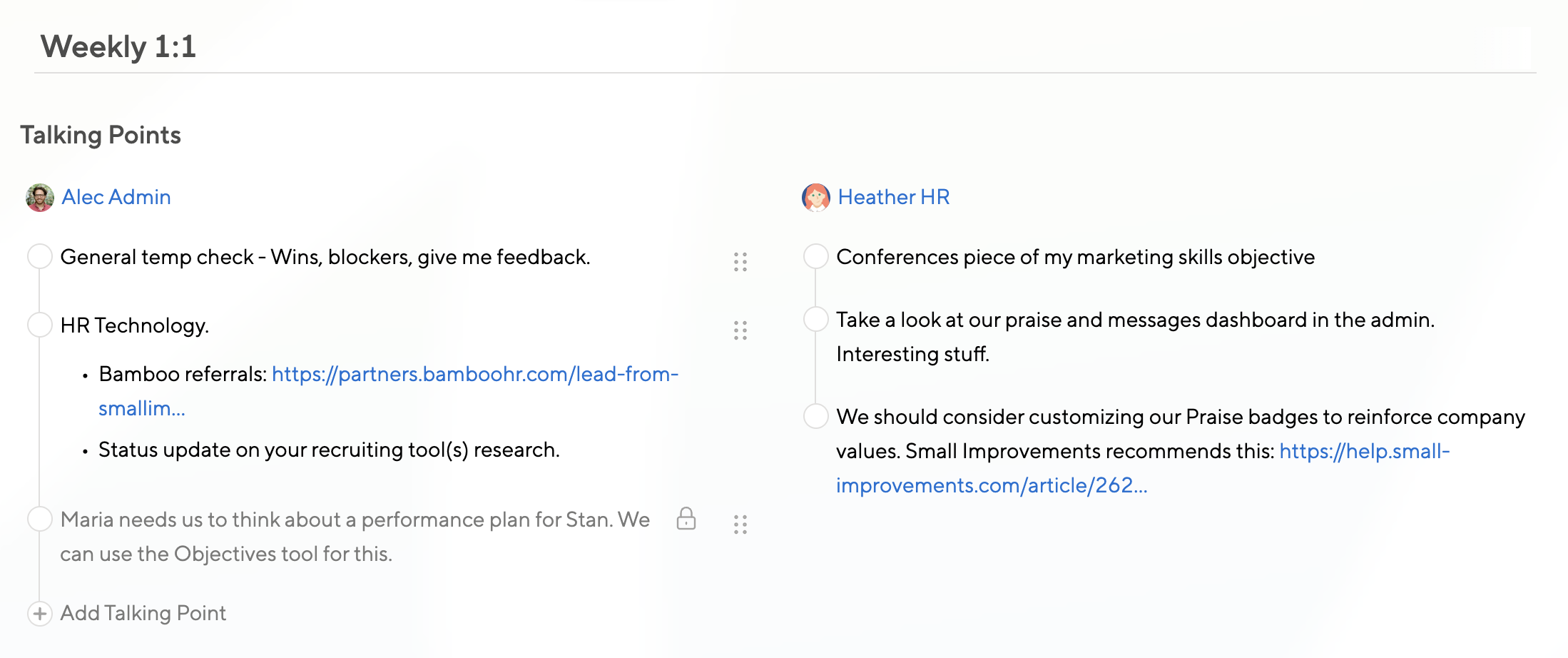
Talking Points
Prepare Together, Show Up Ready
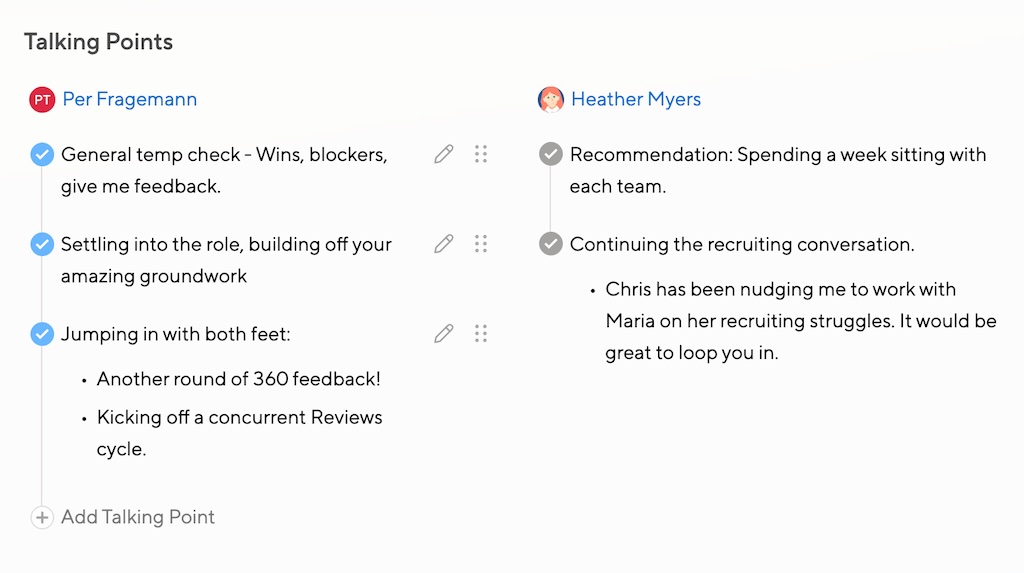
With Talking Points, managers and employees can each add topics before the meeting starts. Nobody walks in guessing what the conversation is about, and nobody leaves an important topic unsaid because there wasn’t time.
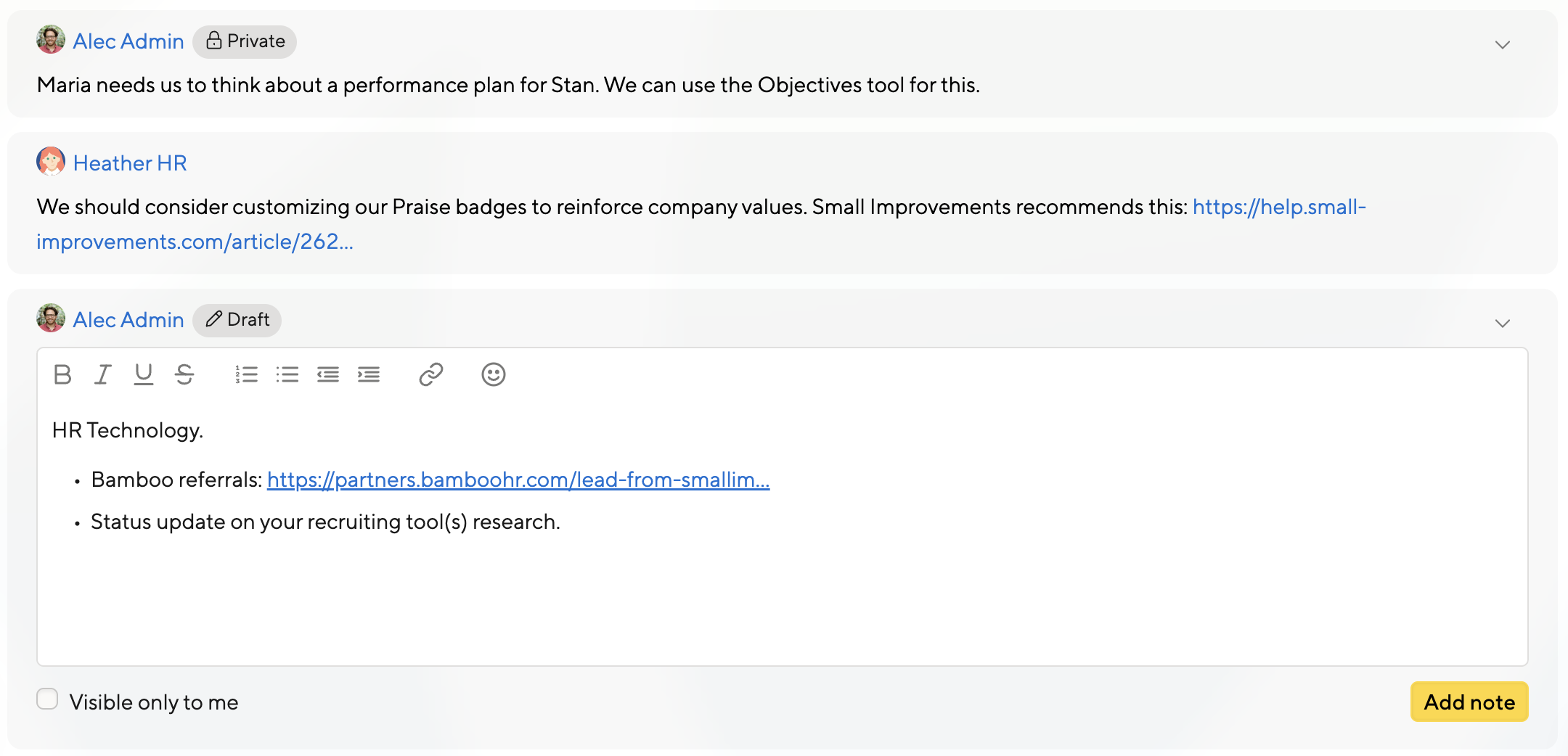
Meeting Notes
Keep a Record Worth Keeping
Meeting Notes give both sides a shared, searchable history of what was discussed and agreed.
That history carries forward into Performance Reviews, so nothing important gets lost between conversations, and nobody has to rely on memory alone.
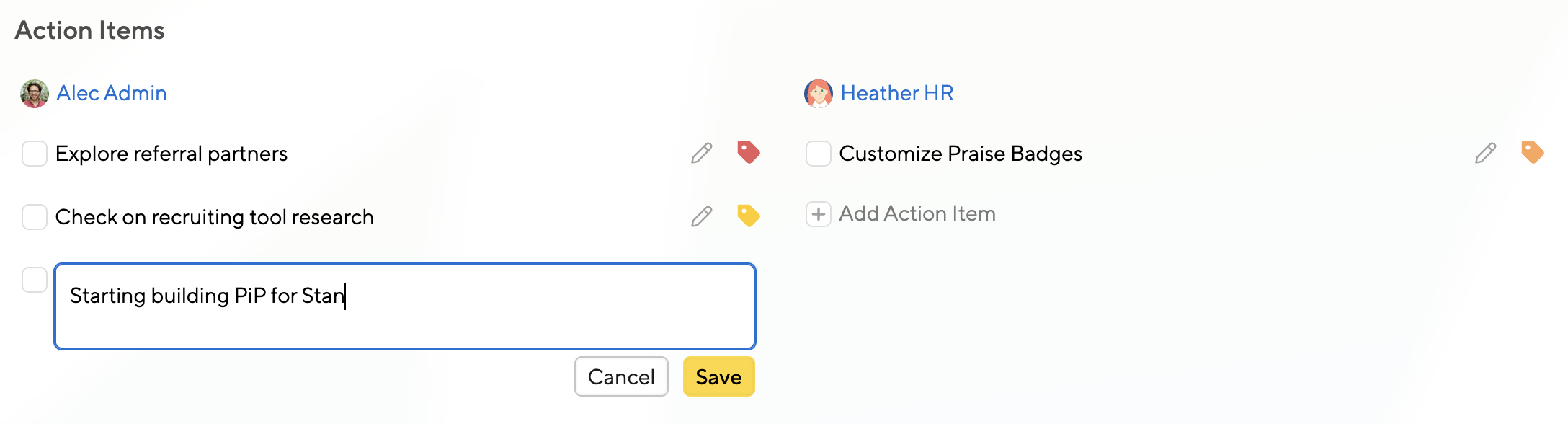
Action Items
Turn Conversations Into Follow-Through
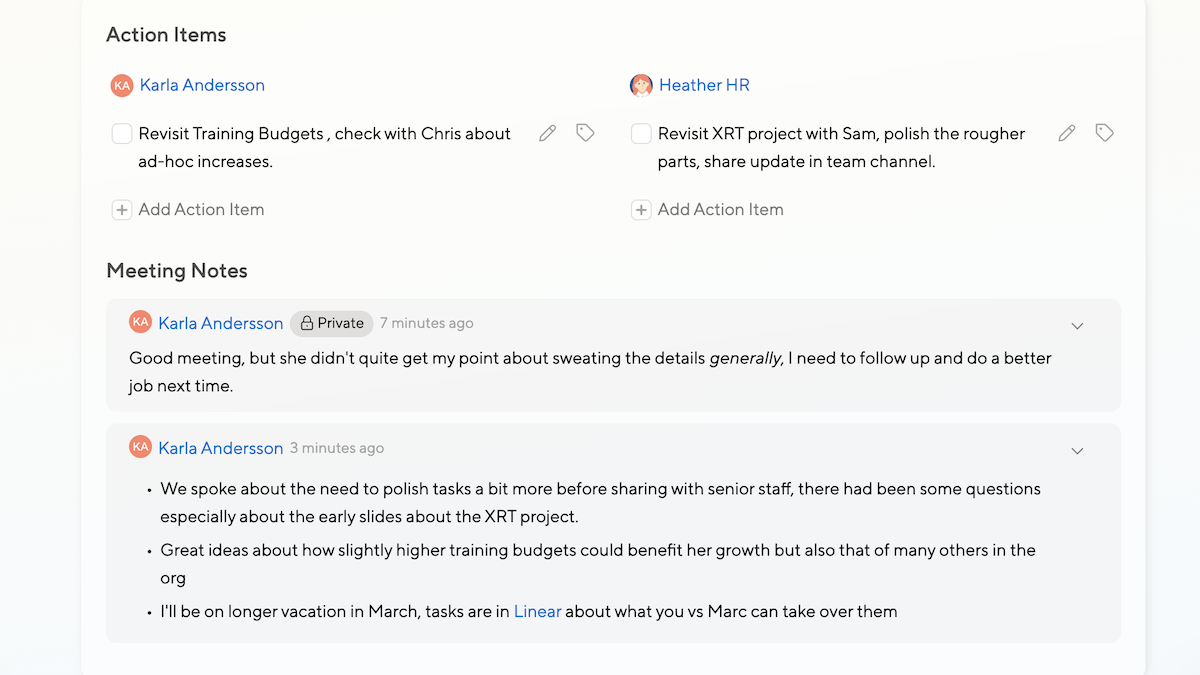
Every 1:1 surfaces commitments. Action Items make sure they don’t disappear the moment the meeting ends.
Assign them, track them, and check back in next time, so progress is visible instead of assumed.
Drive conversations worth having
Prepare Together, Show Up Ready
With Talking Points, managers and employees can each add topics before the meeting starts. Nobody walks in guessing what the conversation is about, and nobody leaves an important topic unsaid because there wasn’t time.
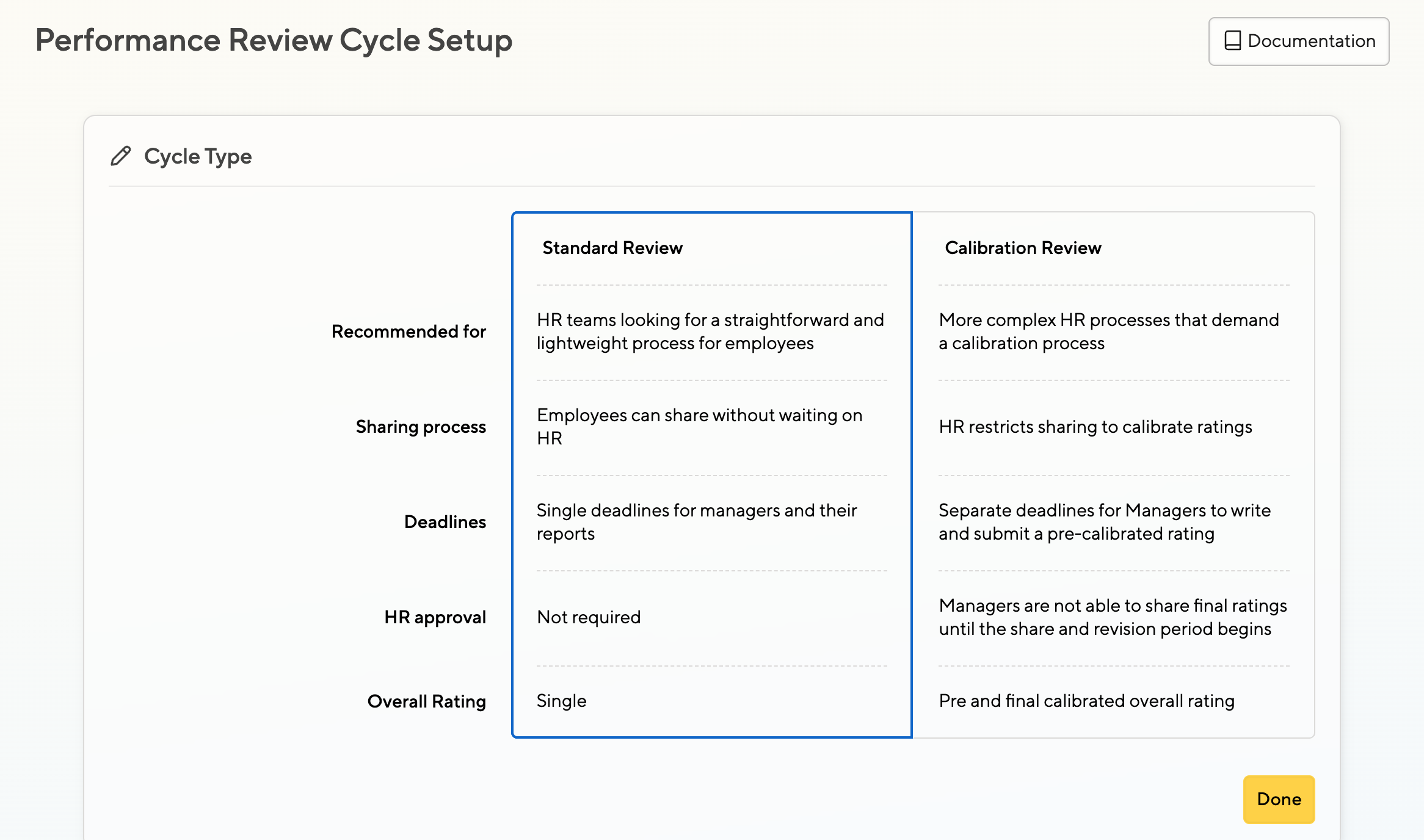
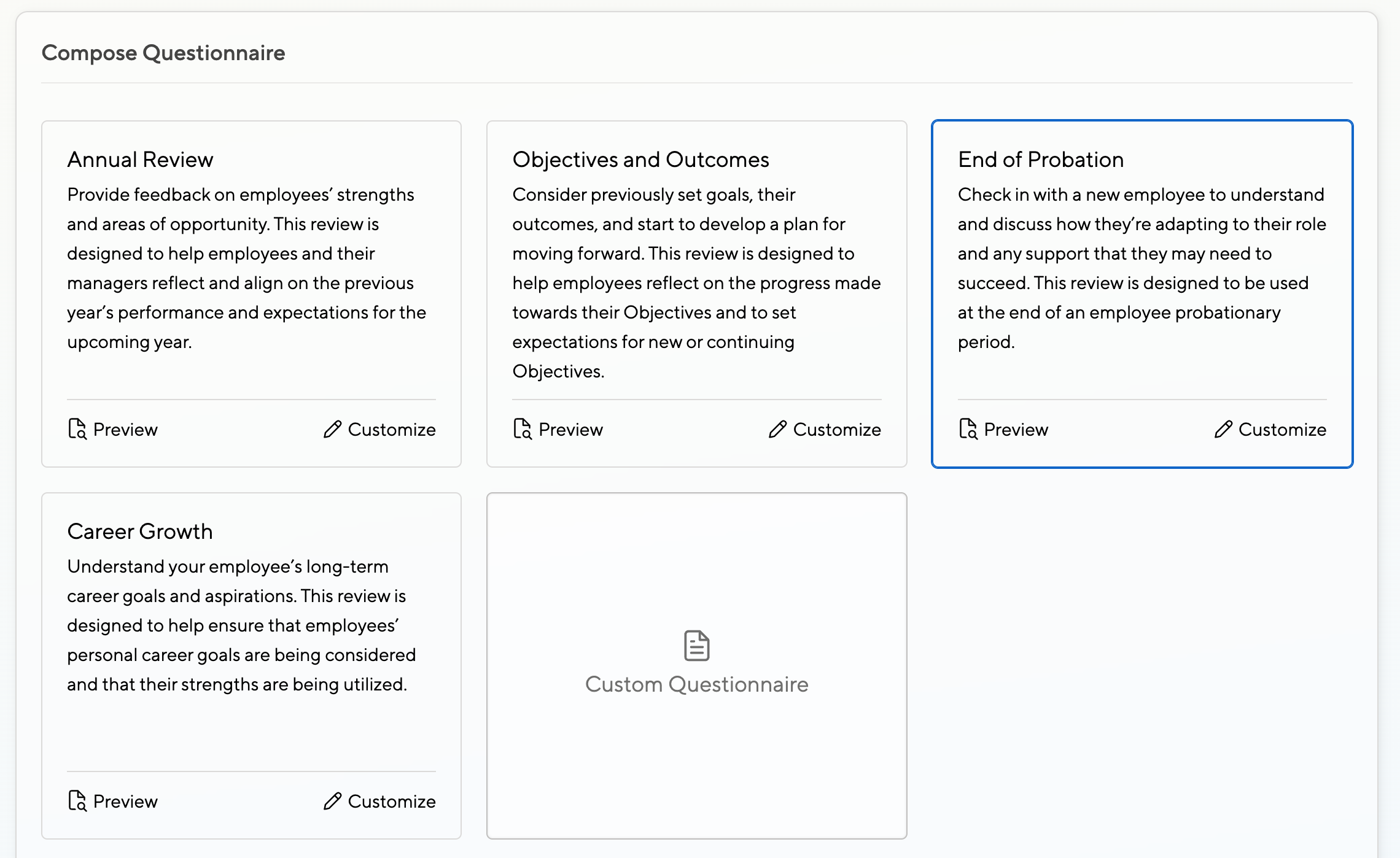
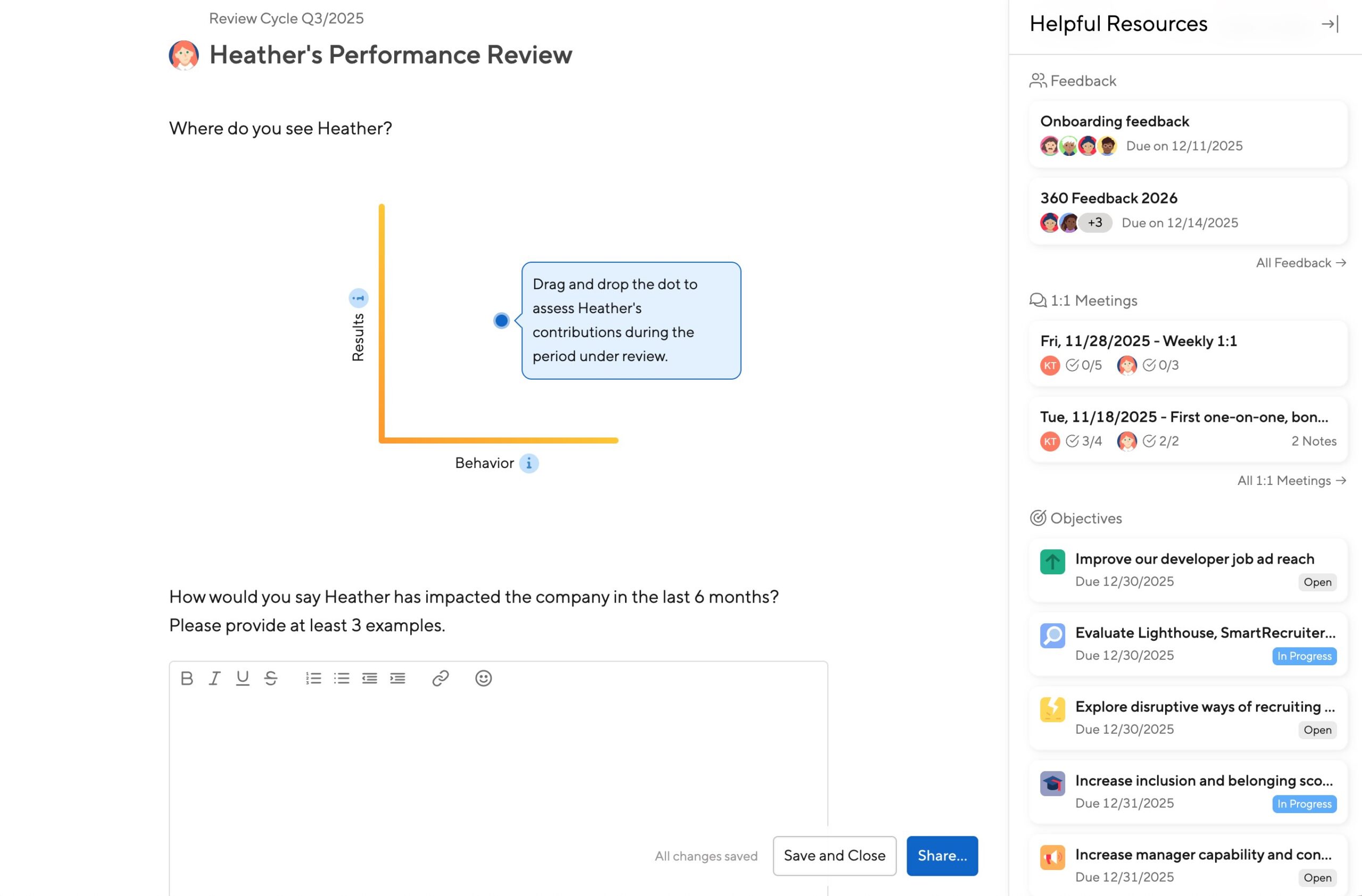
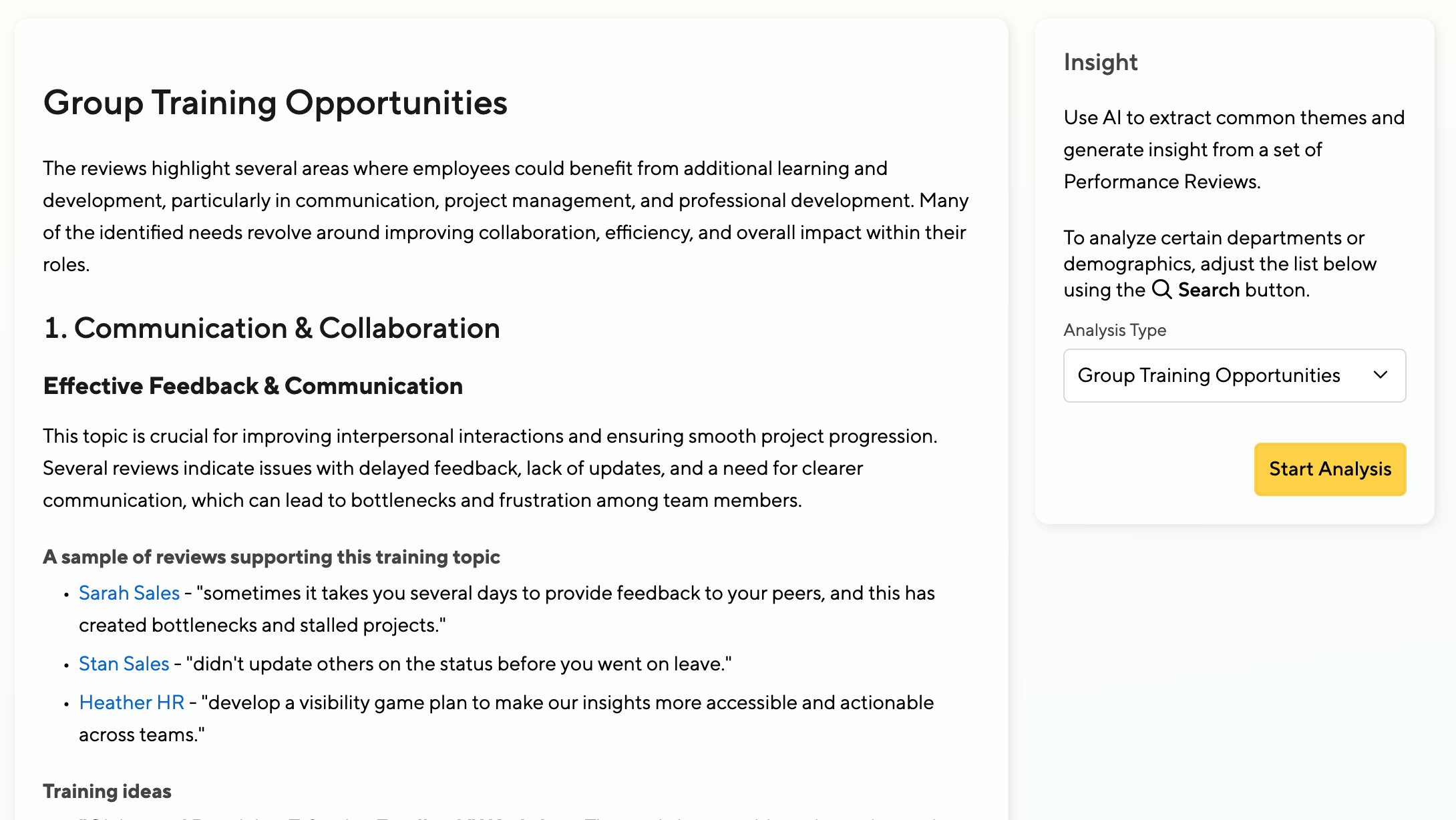
Keep a record worth keeping
Meeting Notes give both sides a shared, searchable history of what was discussed and agreed.
That history carries forward into Performance Reviews, so nothing important gets lost between conversations, and nobody has to rely on memory alone.
Turn conversations into follow-through
Help your employees build a roadmap to success and monitor progress to keep them on track.
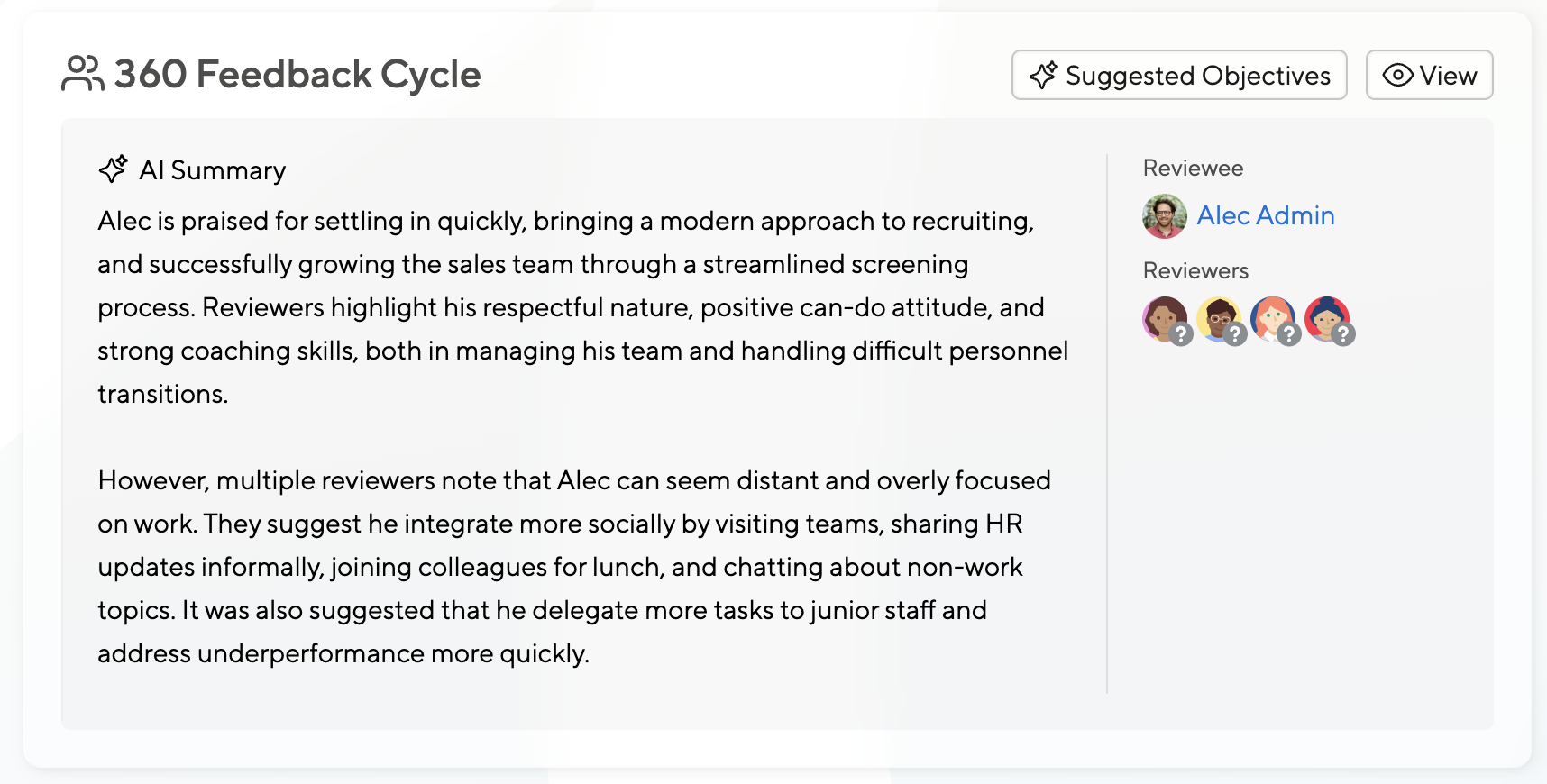
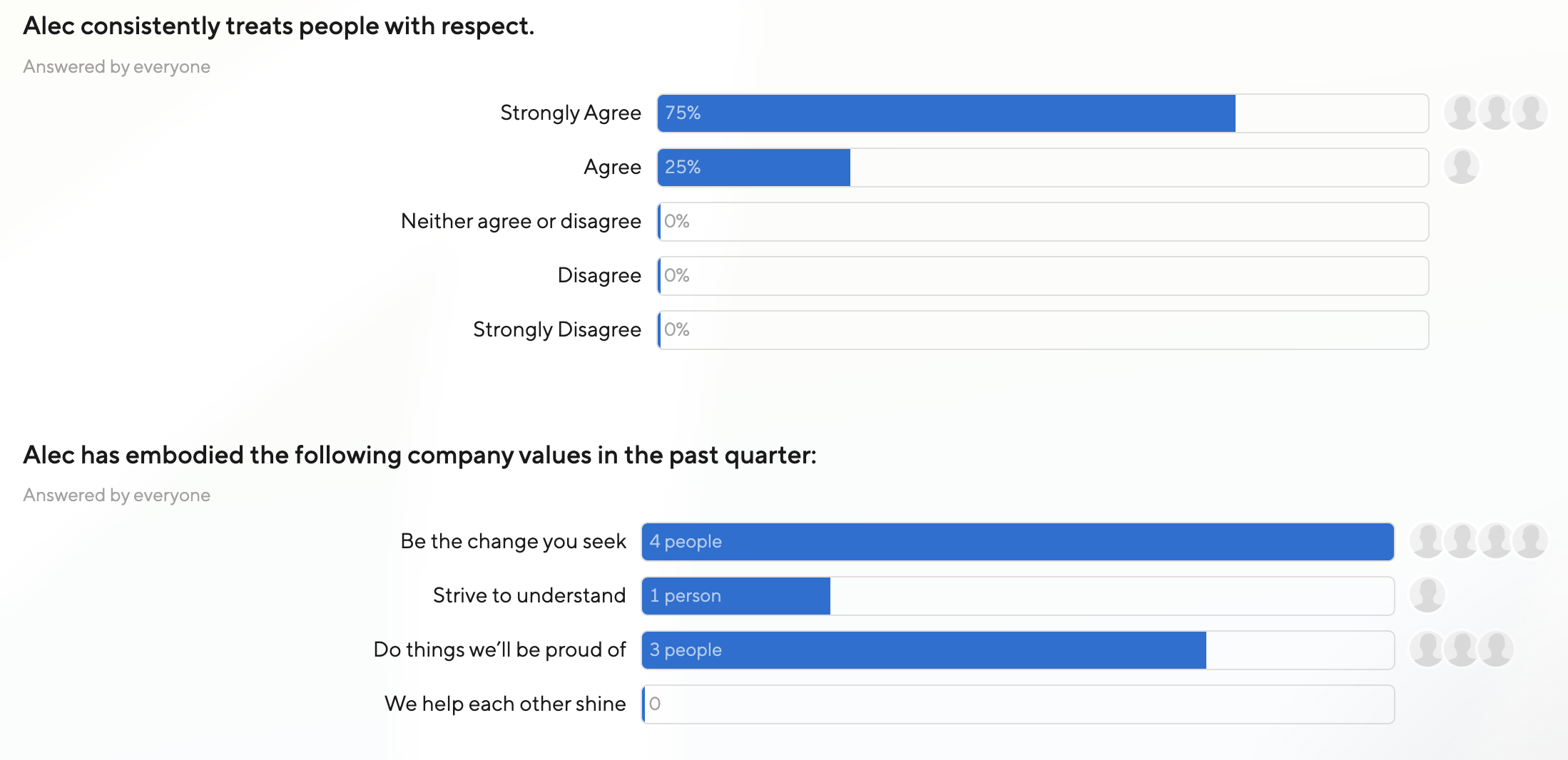
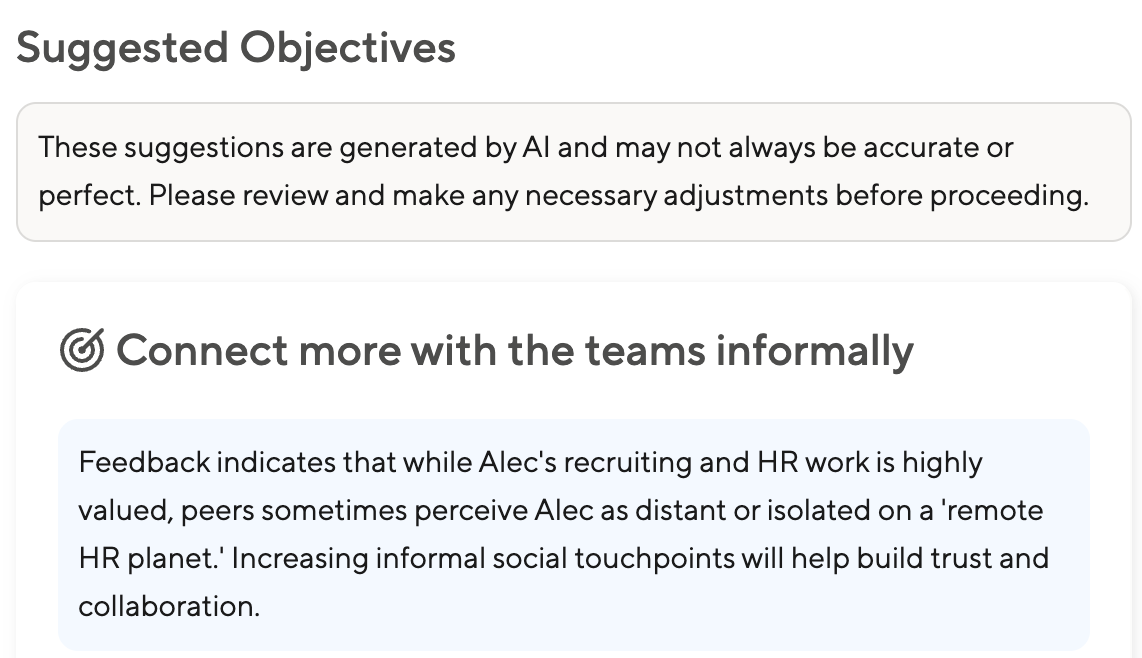
Reviews are just the start of the conversation. Turn Feedback into action by creating Objectives with a little help from the AI Objectives Coach.
Keep everyone in the loop
Give your leaders a simple way to stay aligned with their teams, using structured 1:1 Meetings.
Set shared agendas to focus conversations on what matters most, and track action items to maintain momentum.
Measure engagement
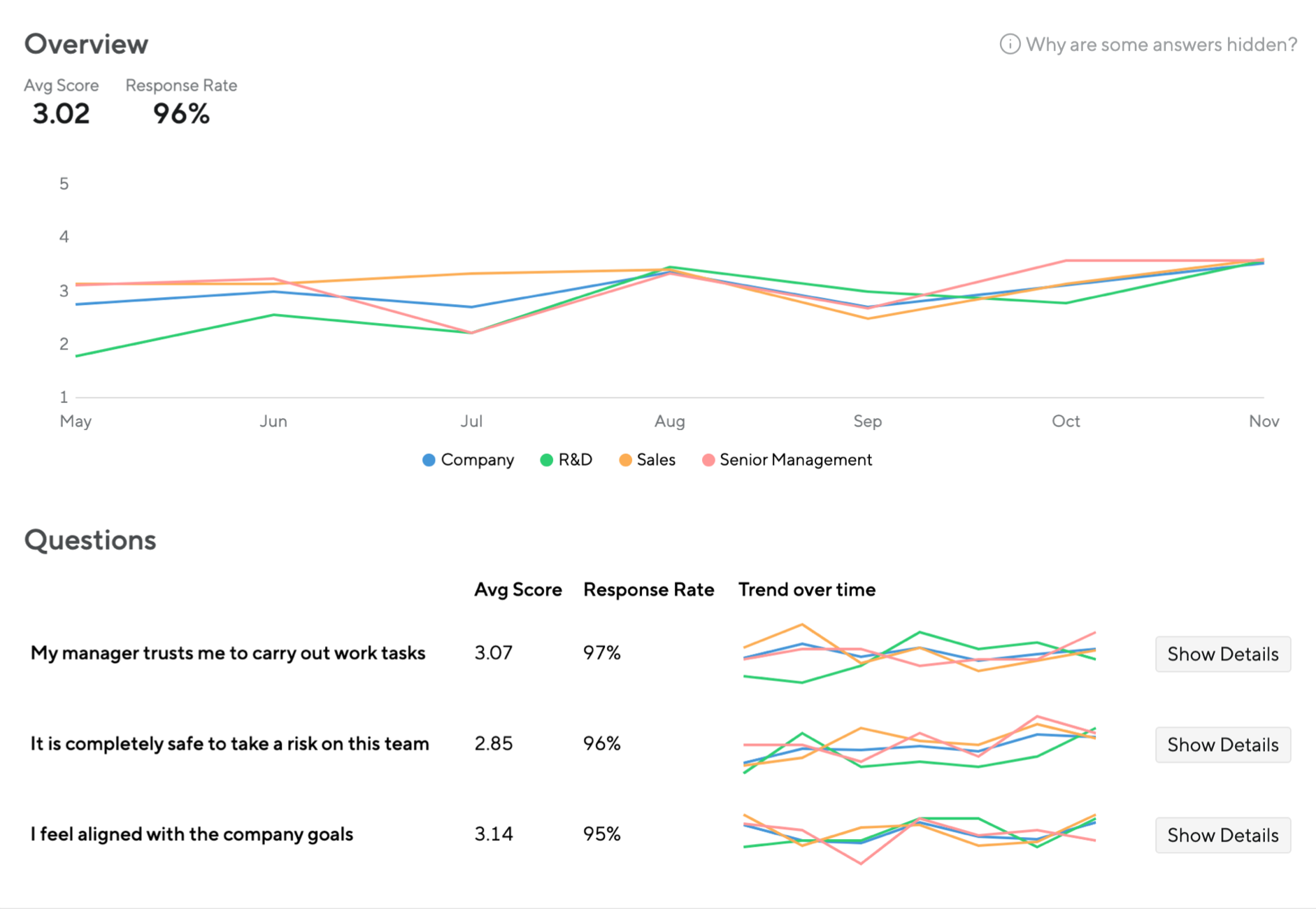
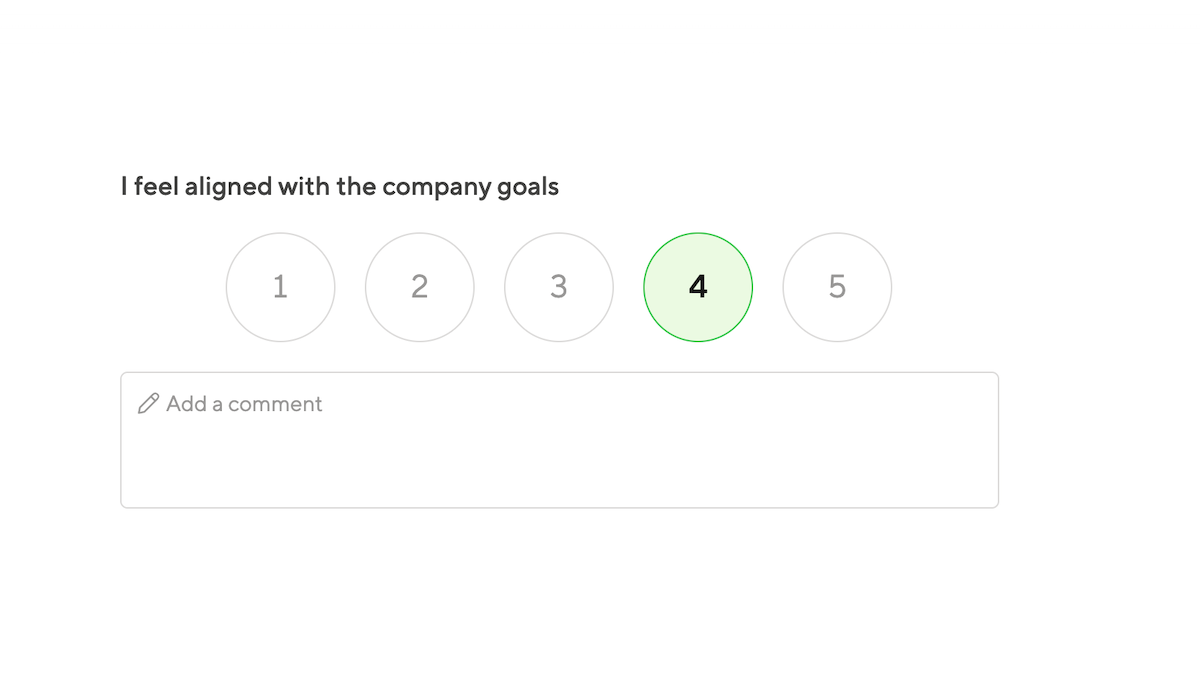
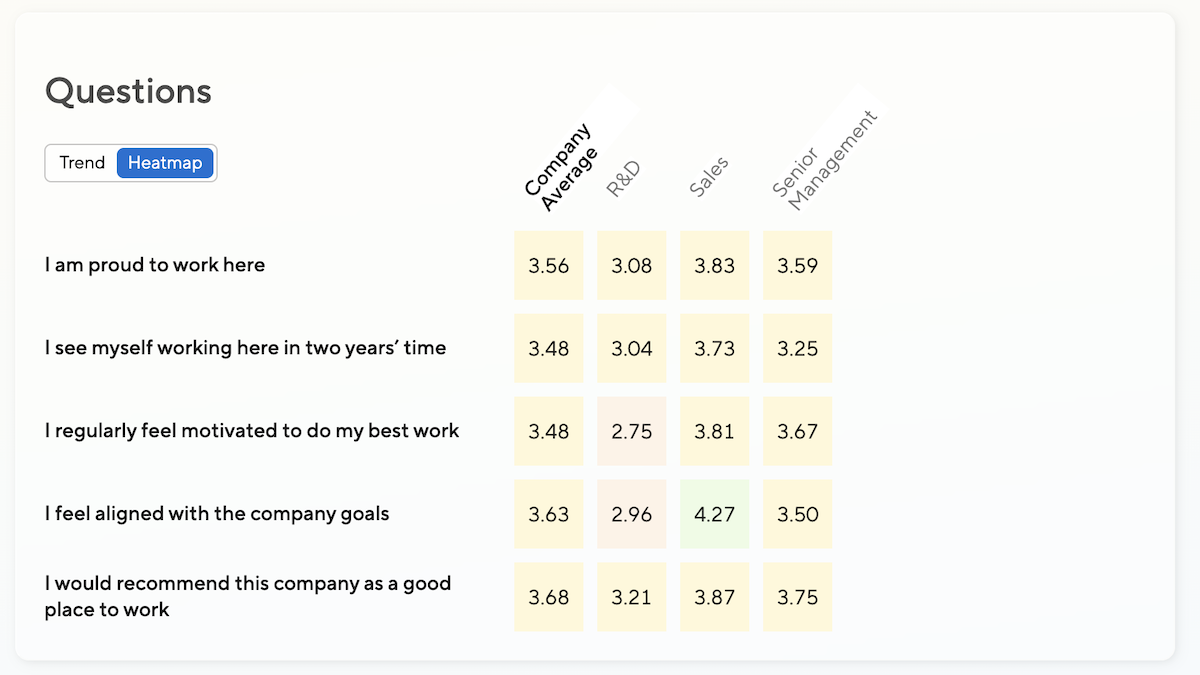
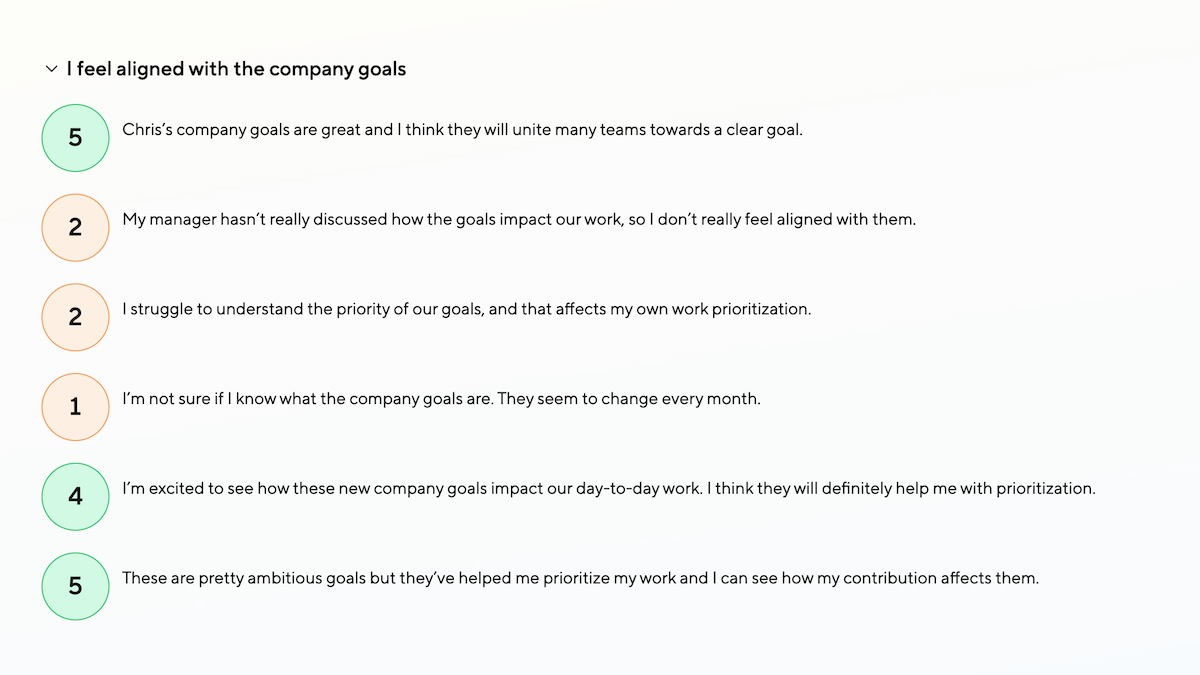
Get real-time insight into how your team feels, and track engagement across teams and over time.
Employees can respond honestly, knowing every response stays confidential. Heatmaps and trend reports point your HR team toward exactly where attention is needed.
Keep the conversation going
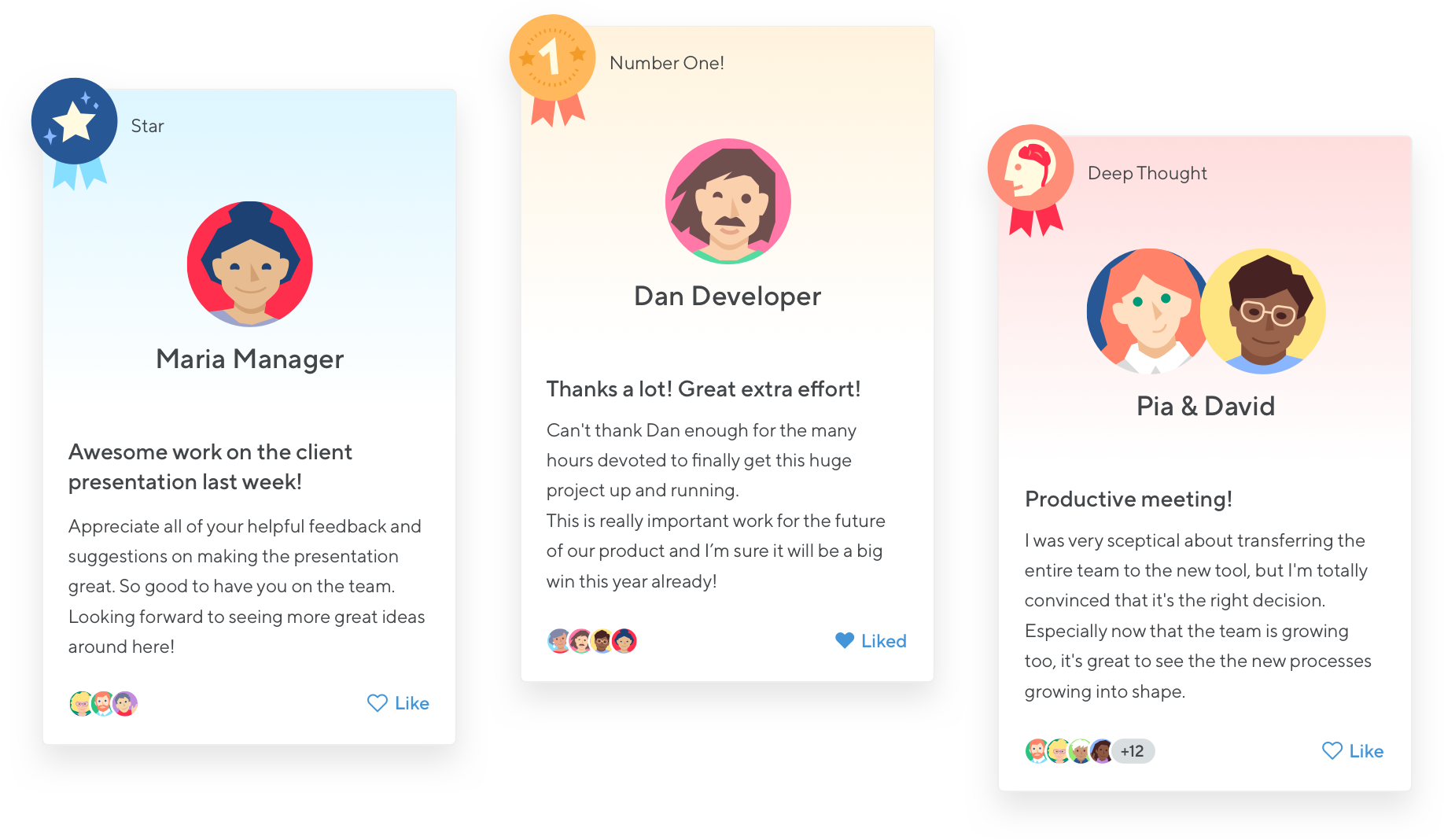
Company driven initiatives are the catalyst, but it’s ongoing feedback that helps people improve continuously.
Public praise is more than “just” a pat on the back: It sets the example for behaviour you want to see more of in your company.
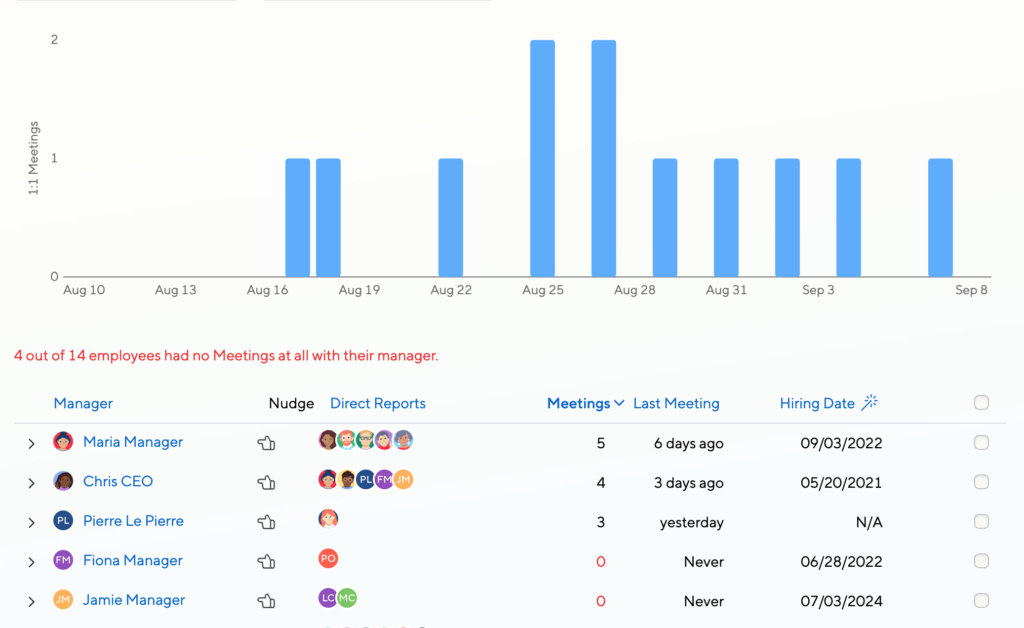
Know Your 1:1s are Actually Happening
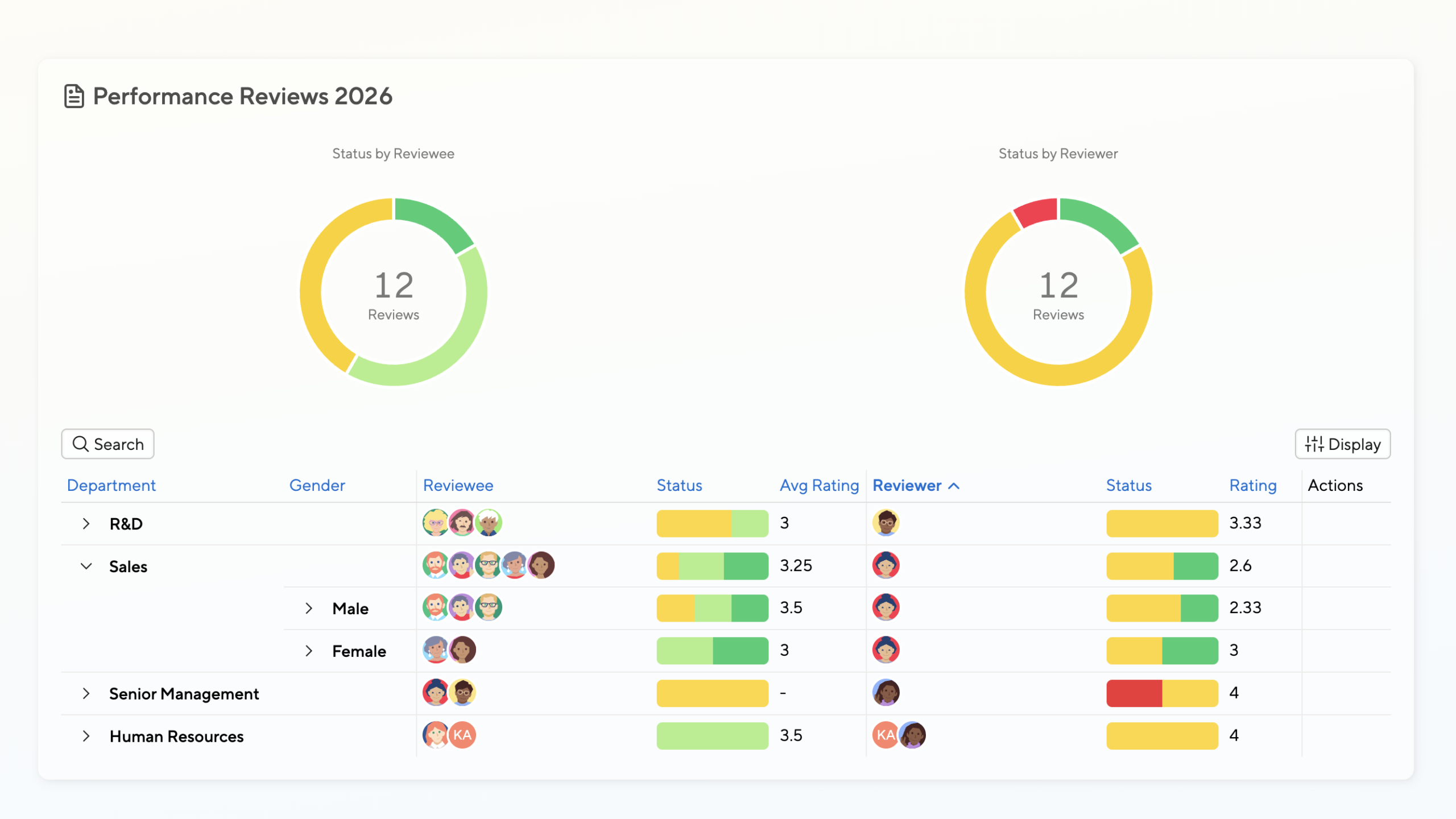
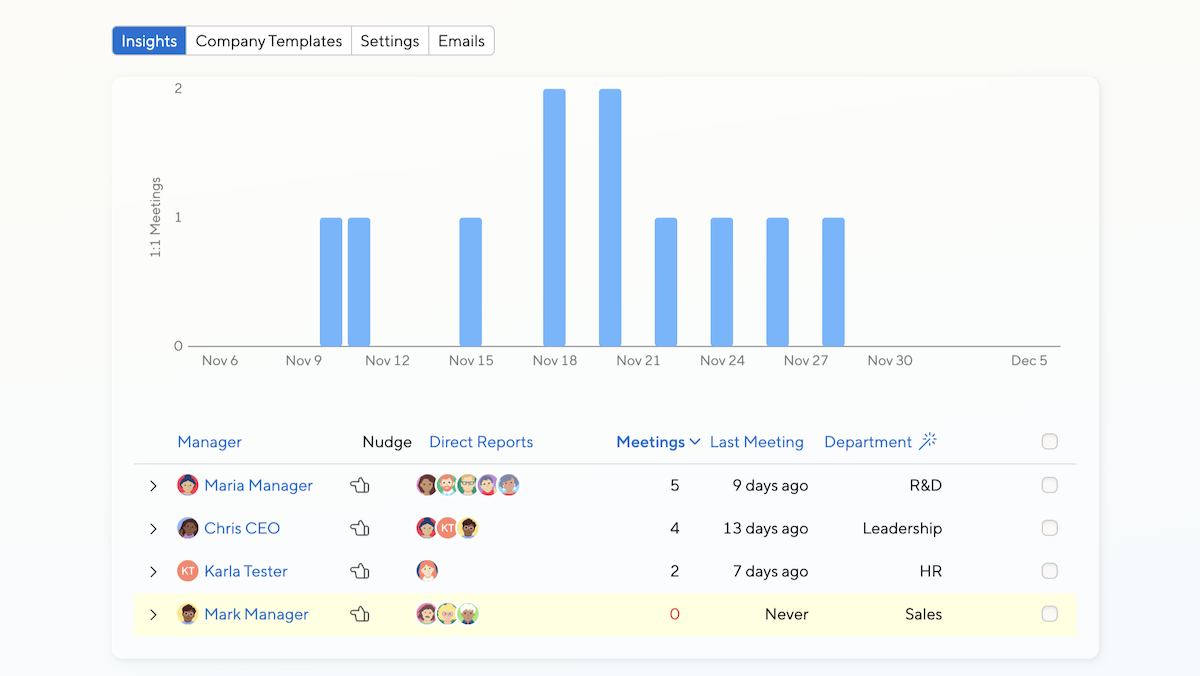
You can’t improve what you can’t see. Small Improvements gives HR leaders a simple, org-wide view of 1:1 frequency and manager follow-through, so you can spot teams that need support and send a nudge, all without micromanaging a single conversation.
Amanda Thompson
Learning and Development,
NW Center
Resources to Run Better 1:1s
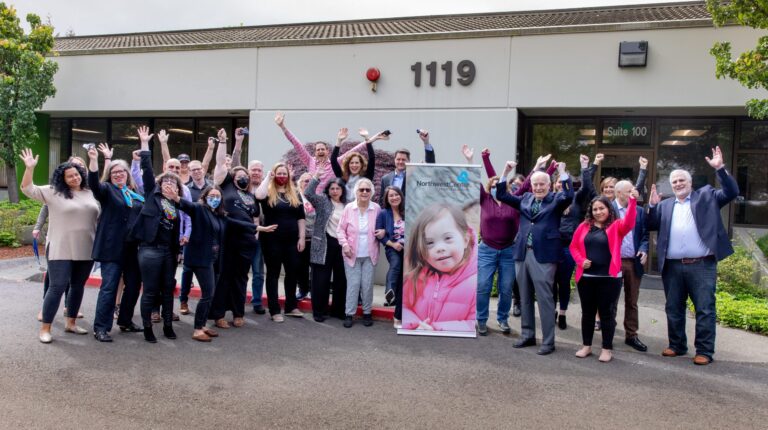
Fostering Open Communication and Alignment with NW Center
In 1965, NW Center started an inclusion revolution. Since then, they have been at the forefront of disability inclusion and…

24 questions to ask in your next 1:1 meeting
Stuck in a 1:1 Meeting rut? Or just not sure what you should be asking? Jason Lauritsen is back with a guide for the questions you should be posing to your managers….
Take out the Guesswork
Preparing for a 1:1 shouldn’t take longer than the meeting itself. These three things make sure nobody ever starts from nothing.
Get a Head Start With Suggested Talking Points
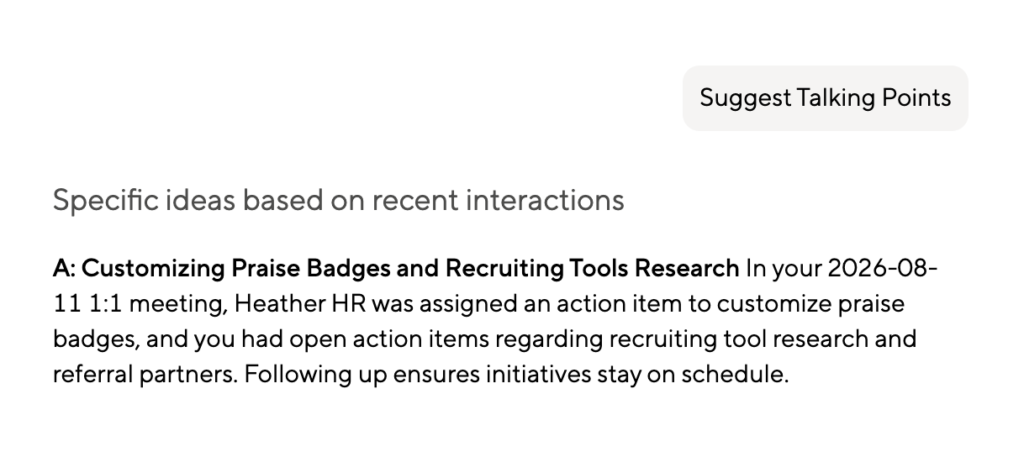
Staring at an empty agenda is the easiest way to skip a 1:1 altogether. Small Improvements can suggest a few Talking Points to start from, based on what’s been going on since the last conversation, so managers and employees always have somewhere to begin.
Nothing Important Gets Left Behind
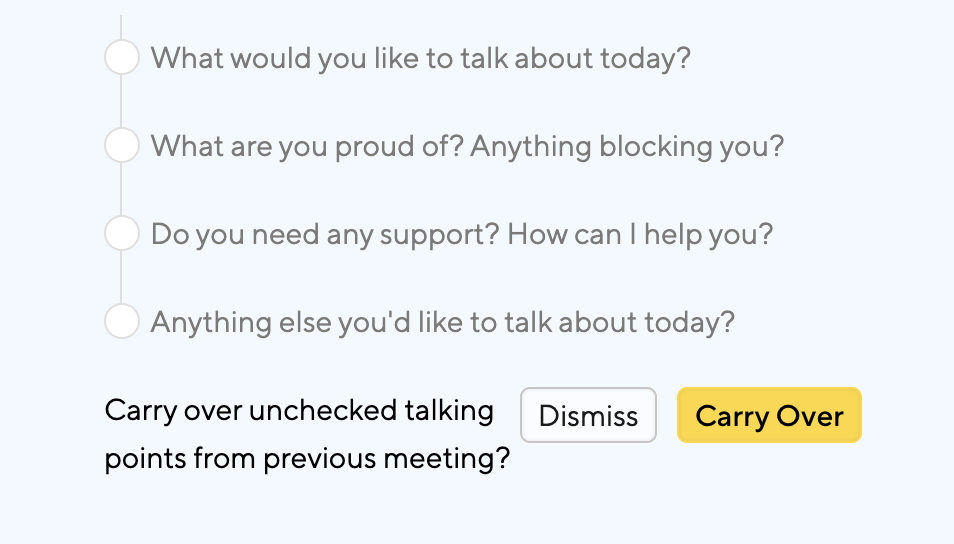
Didn’t get to everything last time? Talking Points that weren’t resolved carry forward into the next 1:1 automatically, so a busy meeting doesn’t mean an idea quietly disappears.
A Structure for Any Conversation
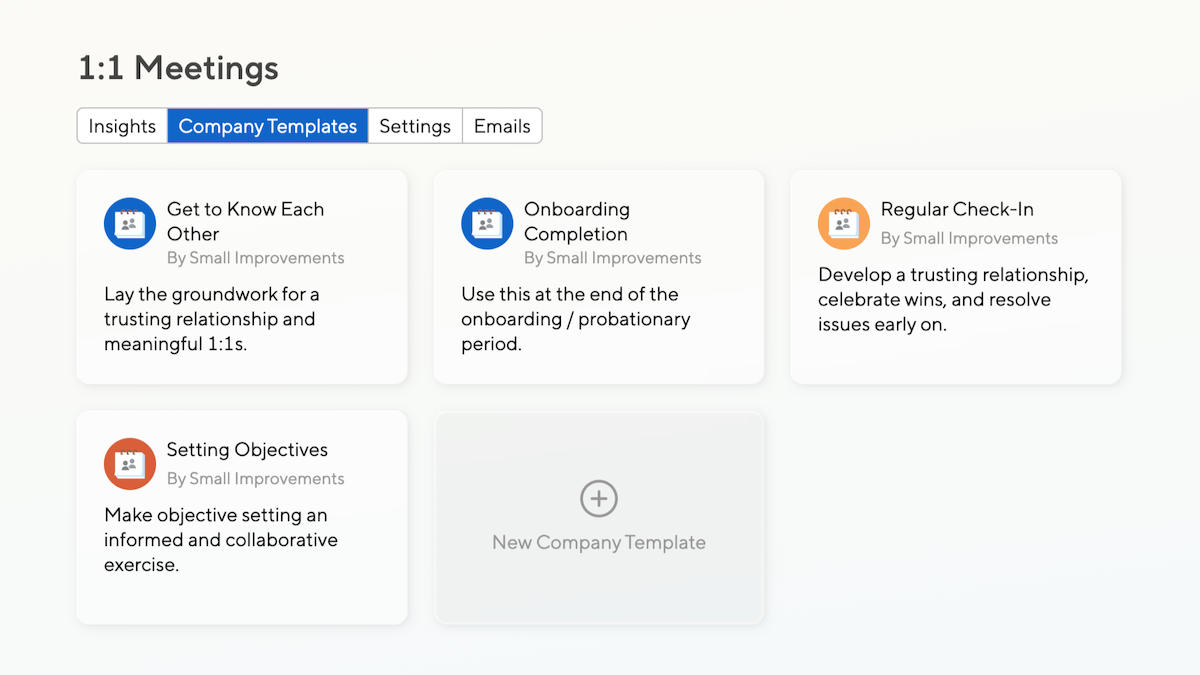
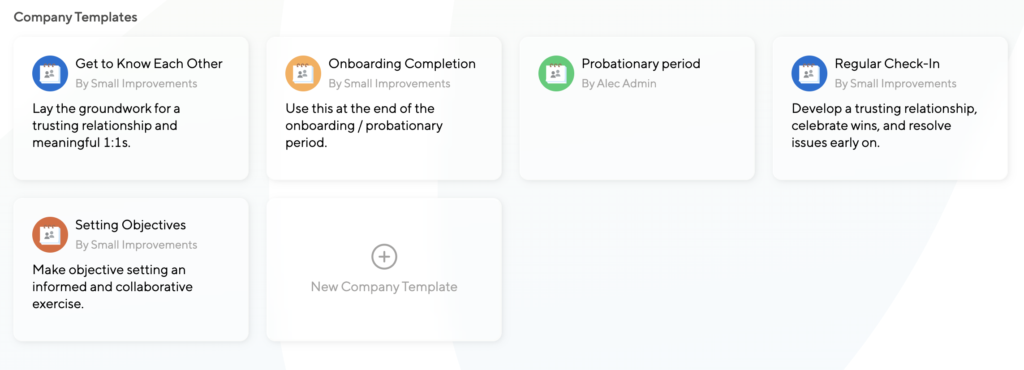
Whether it’s a routine check-in or a harder conversation, 1:1 Meeting Templates give managers a ready-made structure to work from, so nobody has to build an agenda from scratch.
Connect 1:1s to the Rest of Performance Management
A 1:1 is not a one-off conversation, but part of a bigger picture. Here’s how what happens in your 1:1s carries into everything else your team is working on.

Feed into a Performance Review
What's said in a 1:1 shouldn't be a surprise later. Talking Points and Meeting Notes carry forward all year, so nothing raised along the way gets left out when Performance Review time comes around.

Turn Talk Into Action and Stay Accountable
A good 1:1 surfaces more than talking points, it surfaces next steps. Carry what comes up in conversation straight into Objectives your team can track and revisit.

Keep Recognition Going Between Meetings
Not every piece of Feedback or Praise needs to wait for a scheduled 1:1. Share it the moment it happens, so the conversation keeps going all week, not just once a month.
Frequently Asked Questions
What should you talk about in a 1:1 meeting?
Good 1:1s cover more than status updates — think career growth, blockers, feedback in both directions, and follow-up on past commitments. Small Improvements’ Talking Points feature lets both manager and employee add agenda items in advance, so the conversation stays balanced and prepared rather than one-sided.
How often should managers have 1:1s with direct reports?
Most companies find weekly or biweekly 1:1s strike the right balance — frequent enough to catch issues early and build trust, without overloading calendars. Small Improvements’ admin dashboard shows which managers are keeping up a regular cadence, so HR can encourage consistency without micromanaging.
What is a good 1:1 meeting agenda template?
A solid template usually includes a check-in on wellbeing, updates on current goals, open talking points from either side, and space for feedback and action items. Small Improvements ships with customizable meeting templates so admins can standardize a starting structure while still leaving room for individual topics.
How do you track action items from 1:1 meetings?
Small Improvements’ Action Items feature lets both participants log follow-ups directly in the meeting notes, so commitments are recorded in the moment and visible again at the next 1:1 — instead of getting lost in a notebook or a Slack DM.
Why are 1:1 meetings important?
Regular 1:1s build trust, catch small issues before they become big ones, and create a paper trail of context that makes Performance Reviews faster and fairer — since managers aren’t relying on memory alone when review season comes around.
Can HR see whether managers are holding regular 1:1s?
Yes — the admin dashboard shows which managers are conducting 1:1s consistently across the organization, giving HR visibility to encourage the practice where it’s lagging, without reading the private content of individual meetings.
How do 1:1s and Performance Reviews connect?
Because 1:1 notes are stored centrally, managers can pull them up as a sidebar reference while writing a Performance Review — turning months of small conversations into specific, well-documented examples instead of vague, recency-biased impressions.
What's the difference between a 1:1 and a Performance Review?
A 1:1 is a frequent, informal, two-way conversation focused on immediate work, blockers, and growth; a Performance Review is a periodic, more formal evaluation of performance over a longer stretch of time. The two work best together — 1:1 notes give reviews real substance instead of relying on memory.
Have more questions?
Email us at support@small-improvements.com