

As teams grow, many start re-evaluating whether Leapsome still fits the way they work. Some run into increasing complexity. Others end up paying for modules they barely use. And many HR teams discover that all-in-one platforms often come with tradeoffs in usability, flexibility, and long-term adoption.
In this guide, we break down the 7 best Leapsome alternatives in 2026. We compare both established HR platforms and newer, more focused tools. The goal is simple: help you find software that better matches your workflows, company culture, and stage of growth.
TL;DR: the best Leapsome alternatives at a glance
Don’t have time to read the full guide? Here’s the short version:
- Small Improvements: Best for small and midsize businesses that want lightweight, highly customizable performance management software
- Teamflect: Best for Microsoft 365 teams that want performance reviews, feedback, goals, and engagement inside Microsoft Teams
- FeedbackPulse: Best for measuring employee satisfaction with eNPS and pulse surveys
- ThriveSparrow: Best for aligning company goals with individual growth goals
- Pensero: Best for engineering organizations that want performance insights tied to real delivery data
- Culture Amp: Best for enterprise-grade people analytics
- Taito.ai: Best for continuous feedback and lightweight 1:1 Meetings
Prefer watching instead? We also made a short video walkthrough of the 7 best Leapsome alternatives, covering where each tool fits best and what type of team should consider it.
What is Leapsome?
Leapsome is a performance management platform that combines reviews, engagement surveys, OKRs, learning, competency frameworks, and development planning in one system. The platform is especially popular among scaling tech companies because it centralizes multiple HR workflows and integrates with a wide range of tools.
Instead of managing separate platforms for reviews, surveys, and learning, teams can run everything in one place. But that breadth also creates complexity. As organizations evolve, many teams start looking for alternatives that are easier to manage, more focused, or better aligned with how their managers and employees actually work.
Why listen to us?
We’ve been building performance management software at Small Improvements since 2011. Today, more than 700 organizations use our platform to run reviews, feedback cycles, and employee development processes.
Over the years, we’ve spoken with many HR teams that switched from Leapsome after outgrowing increasingly complex workflows or looking for simpler, higher-adoption alternatives. This guide is based on those real-world conversations, migration experiences, and customer feedback.
Common reasons teams switch from Leapsome:
- Complex setup: Many teams report that fully configuring reviews, competencies, goals, and development workflows requires a significant upfront investment of time and training. (source)
- Administrative burden: HR teams often mention that maintaining frameworks, review cycles, permissions, and people processes creates substantial ongoing operational work. (source)
- Complex navigation: Despite the platform’s polished UI, users frequently point out that specific workflows and features can still be difficult to locate quickly. (source)
- Pricing: Costs can rise considerably as organizations expand usage across additional modules and larger teams. (source)
- Manual goal tracking: Users regularly mention that goal and OKR management still requires too many manual updates and administrative actions. (source)
Below, we break down the top alternatives to Leapsome. For each platform, we cover key features, ideal use cases and pricing.
1. Small Improvements
Small Improvements is best for small to midsize teams that want continuous feedback without complex workflows. We built the platform for growing companies that need flexible tools for Reviews, 1:1s, and 360 feedback without adopting a heavy HR system.
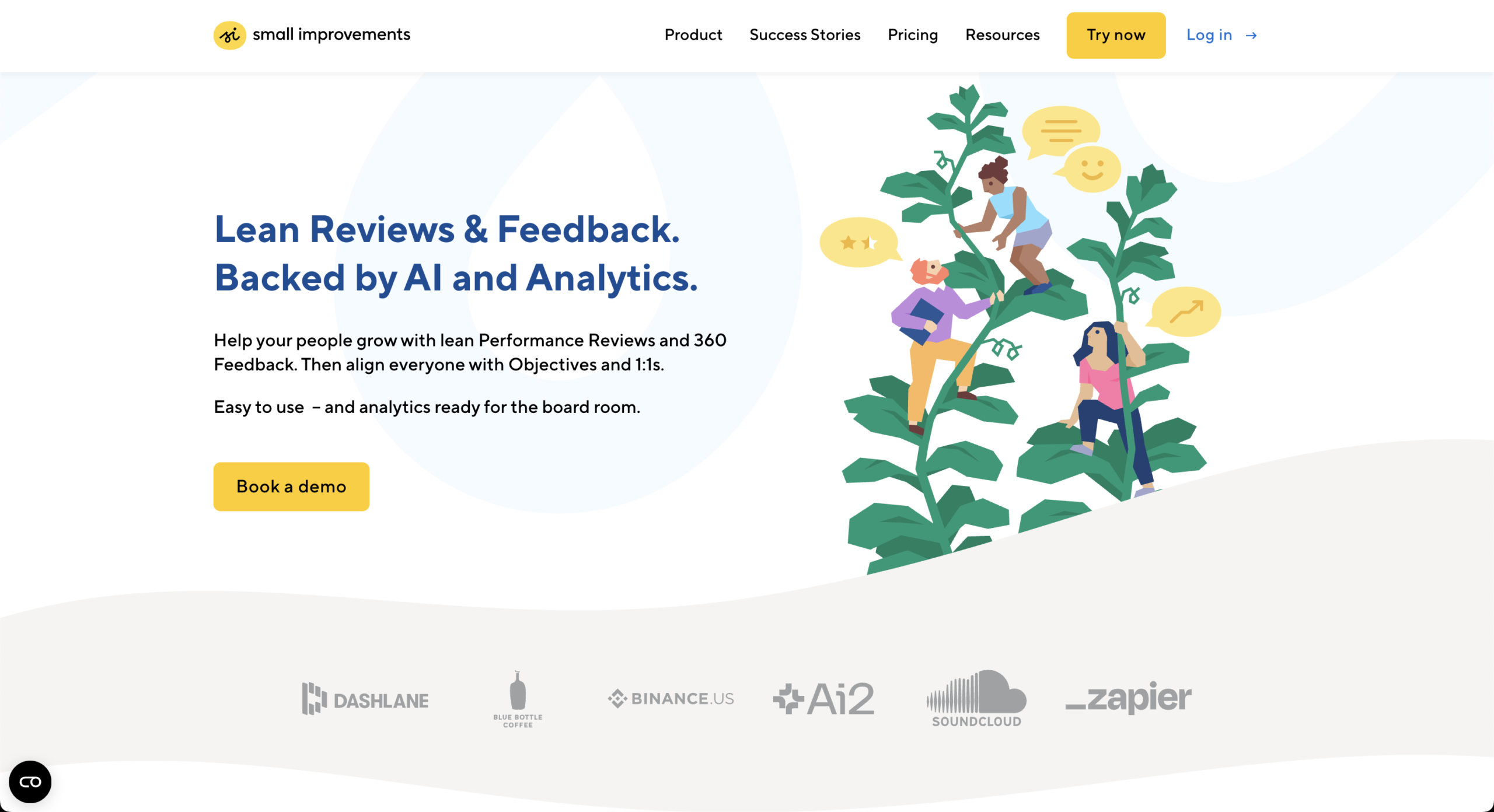
The platform is especially well suited for organizations between roughly 50 and 750 employees that want software that’s easy to roll out, intuitive to use, and simple to maintain over time. Many teams moving from larger all-in-one platforms choose Small Improvements because it stays lightweight while still offering a high degree of flexibility. HR teams can easily customize workflows, forms, terminology, and communication settings to match how their organization works, without needing lengthy implementation projects. At the same time, powerful reporting and admin tools make it easy to analyze feedback, review data, and engagement trends directly inside the platform.
Key features include
- Performance Reviews (with AI Writing Assistant)
- 360-degree feedback
- 1:1 Meetings (with templates and action items)
- Goal and objectives tracking
- Pulse surveys
- Praise (including a live ‘Praise Wall’)
Pricing
Starts at $3 per user per month. A free 30-day trial is available.
2. Teamflect
Teamflect is best for organizations that already use Microsoft 365 and want to manage performance without adding another standalone HR tool. The platform is built directly into Microsoft Teams and Outlook, making it especially useful for companies that want reviews, feedback, goals, and 1:1s to fit into the tools employees already use every day.
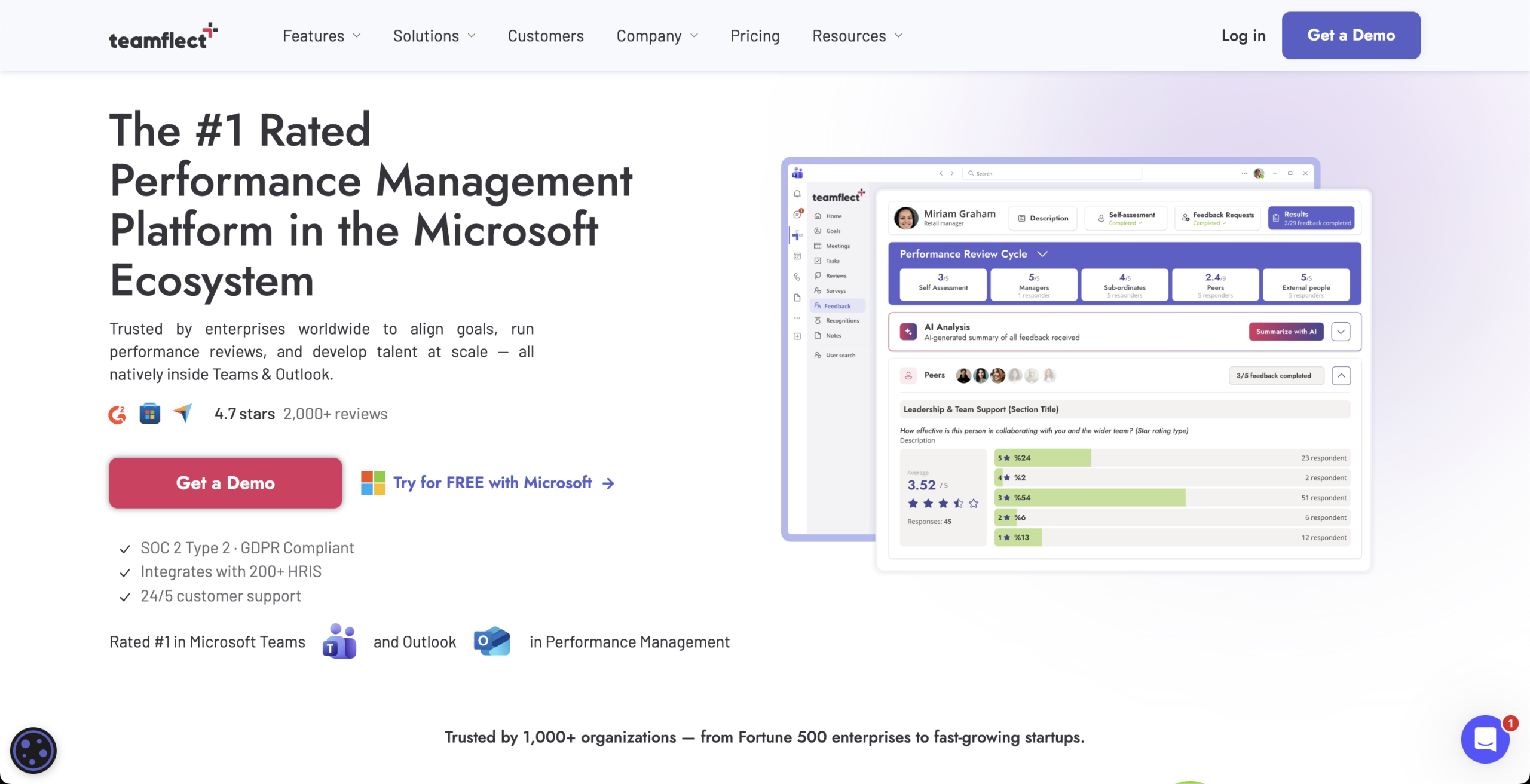
Compared to broader all-in-one platforms like Leapsome, Teamflect takes a more Microsoft-first approach to performance management. Teams can run performance reviews, collect feedback, track goals, and manage employee conversations directly inside Microsoft Teams. This can make adoption easier for organizations that want to reduce tool switching and keep performance workflows close to everyday communication.
Key features include
- Performance Reviews
- 360-degree feedback
- Goal and OKR tracking
- 1:1 meeting tools and templates
- Employee engagement surveys
- AI-powered performance insights
- Microsoft Teams and Outlook integration
- Automated reminders and workflows
- HRIS integrations
Pricing
A free plan is available for up to 10 users. Paid plans start at $7 per user per month.
3. FeedbackPulse
Best for growing companies of 10 to 200 employees, especially remote and hybrid teams, that want engagement surveys, eNPS, and anonymous feedback without enterprise pricing or long implementation.
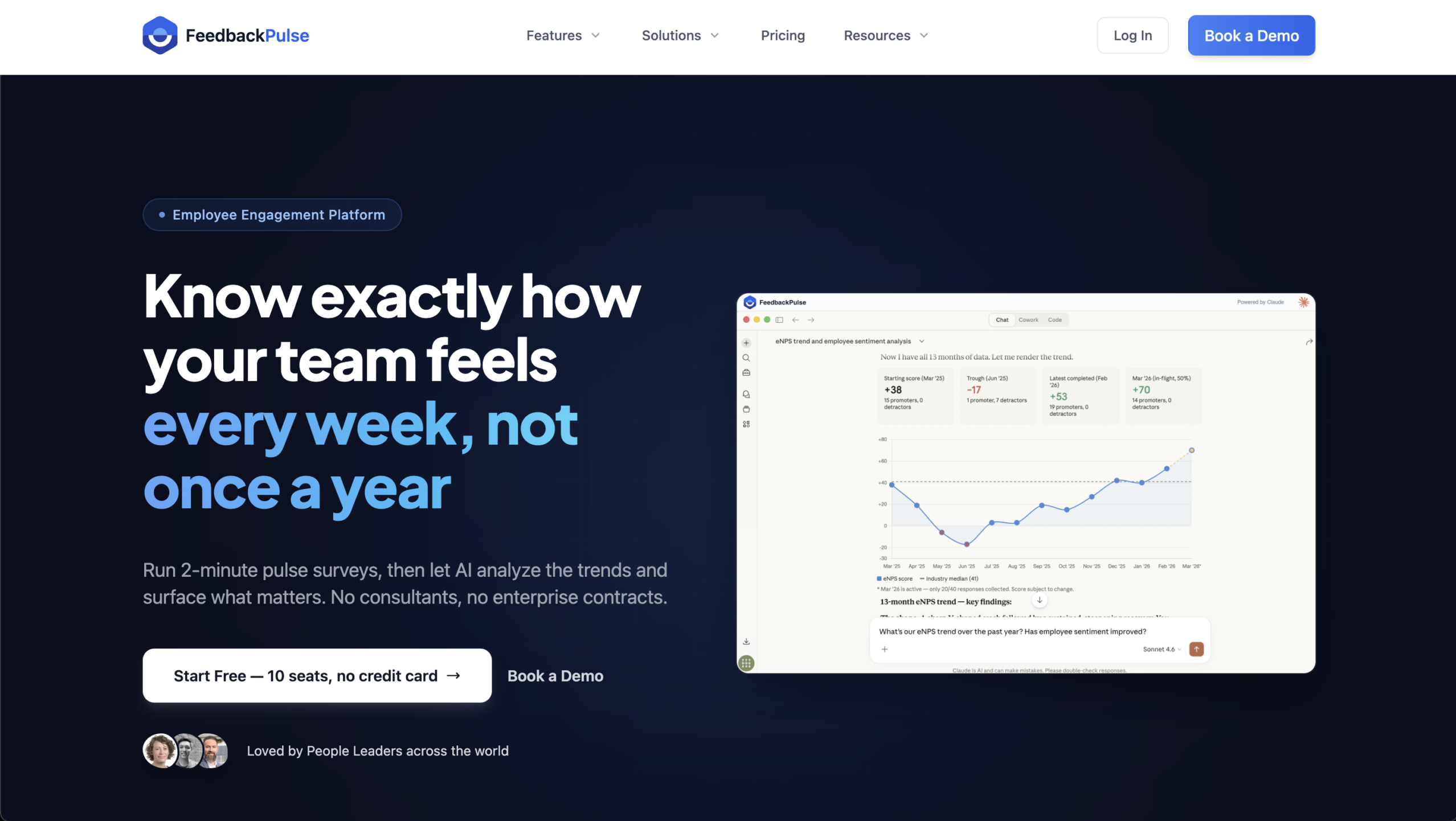
FeedbackPulse is a newer and more focused employee engagement platform built for small and growing teams that mainly need pulse surveys, eNPS, and lightweight feedback workflows without the complexity of a full talent management suite. It reflects the broader shift away from all-in-one HR platforms toward simpler, more specialized tools. The platform runs recurring pulse surveys, calculates eNPS automatically, protects respondent anonymity by default, and includes native AI integrations with Claude, ChatGPT, and Microsoft Copilot for teams that want clear engagement insights without enterprise-level complexity.
Key features include
- Recurring engagement surveys with weekly, monthly, or quarterly cadence
- Built-in eNPS templates with automatic scoring and trend tracking
- Anonymous survey mode with response privacy controls
- Async survey flows and manager dashboards for remote and hybrid teams
- 360 and peer reviews alongside engagement in a single platform
- Native AI integrations with Claude, ChatGPT, and Microsoft Copilot via MCP
Pricing
Free for teams of up to 10 employees. Pro plans start at $4/user/month on annual commitment.
4. ThriveSparrow
ThriveSparrow is best for organizations that want to combine employee engagement, recognition, and performance management in one platform. It helps teams move beyond manual performance tracking with data-driven insights, automated recognition, and streamlined feedback workflows.
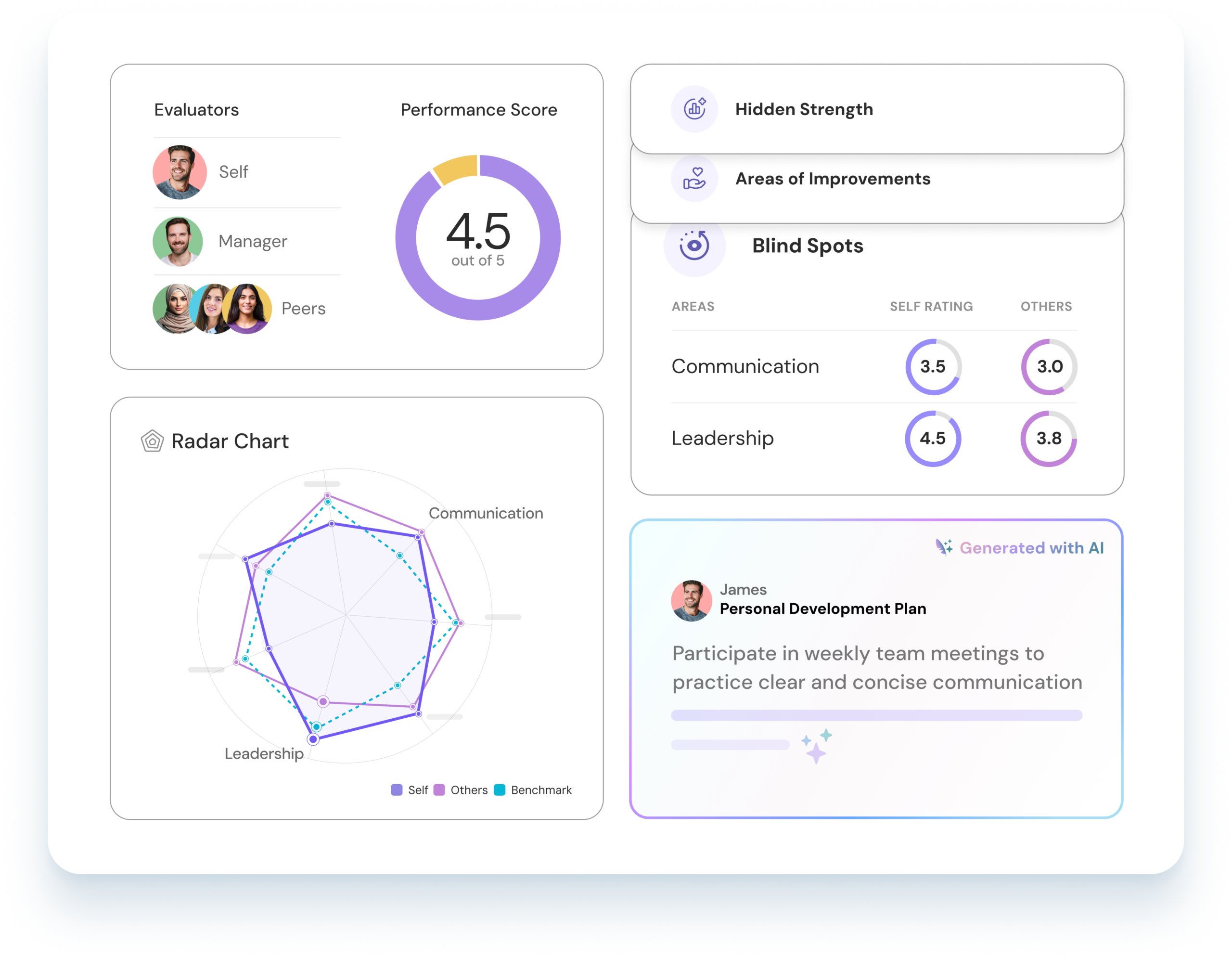
Compared to broader all-in-one platforms like Leapsome, ThriveSparrow takes a more engagement-first approach while still supporting reviews, goals, and employee development. The platform is designed to connect company goals with individual growth, making it a good fit for HR teams that want to build more motivated, high-performing teams.
Key features include
- Automated pulse surveys and eNPS tracking
- 360-degree peer feedback
- AI-assisted performance reviews
- Peer-to-peer recognition and rewards
- Goal alignment and OKR tracking
Pricing
Starts at $5 per user per month.
5. Pensero
Pensero is best for engineering organizations that want to connect performance management with real delivery and productivity data. The platform is designed for technical leaders who need more visibility into alignment, delivery patterns, and engineering effectiveness beyond traditional reviews and feedback cycles.
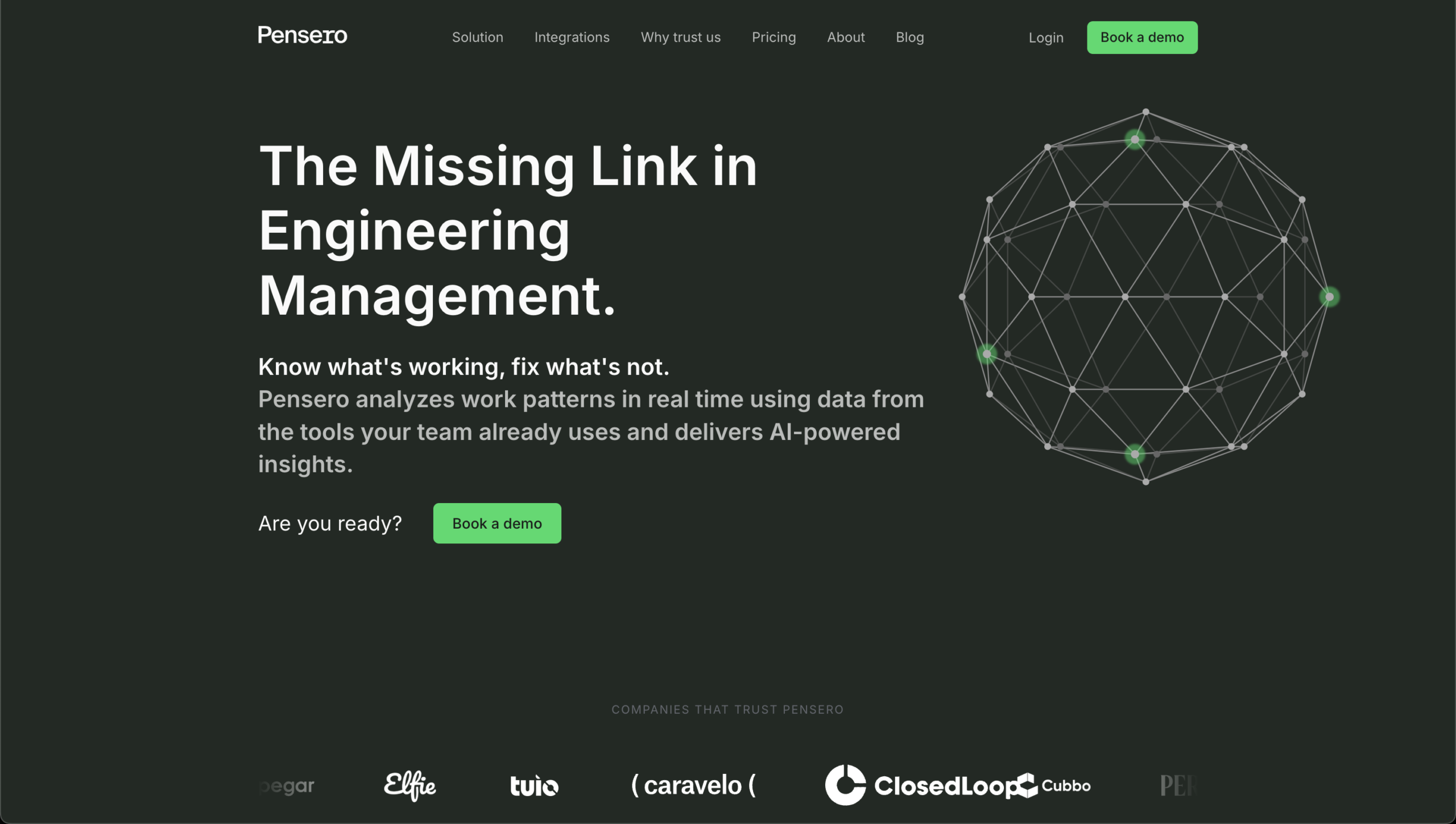
Unlike broader performance management platforms like Leapsome, Pensero focuses specifically on software engineering intelligence. The platform combines AI-powered analytics with real-time delivery insights to help engineering leaders understand how teams are working, collaborating, and shipping over time. That makes it especially relevant for organizations where engineering output and execution speed are closely tied to business performance.
Key features include
- AI-powered engineering analytics
- Real-time work pattern analysis
- Delivery and productivity insights
- Personal and team dashboards
- Industry benchmarks
- Slack digests
- Integrations with existing engineering tools
Pricing
A free Starter plan is available for up to 5 users and 1 repository. Growth plans start at $50 per seat per month, billed annually. Enterprise pricing is custom.
6. Culture Amp
Culture Amp is best for enterprise organizations that prioritize employee engagement analytics and benchmarking. The platform is widely known for its survey science, large benchmarking dataset, and advanced people insights capabilities.
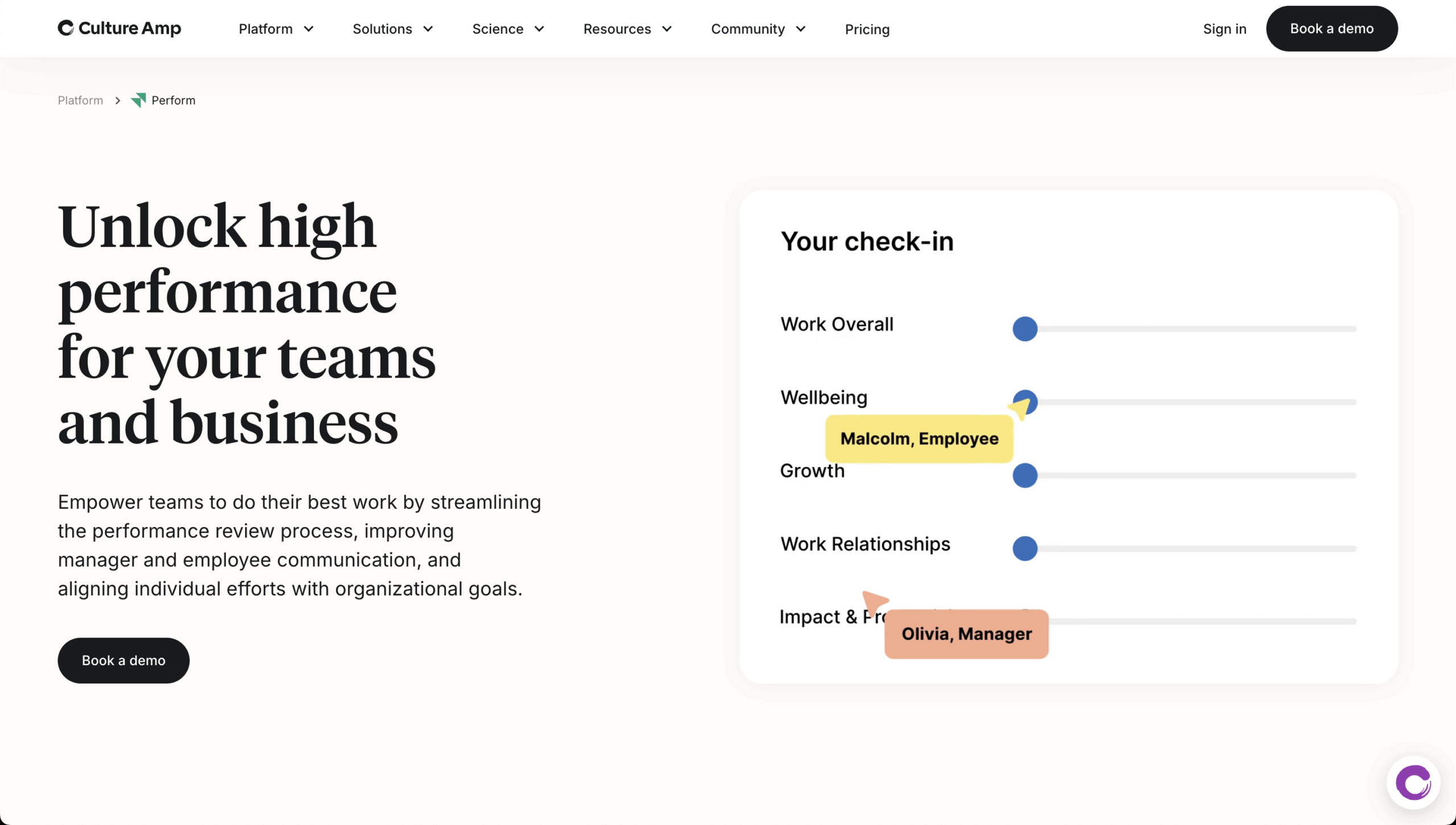
Compared to Leapsome, Culture Amp is generally more analytics-focused and enterprise-oriented. Organizations often choose it when they need deeper engagement measurement, retention insights, and leadership reporting across larger employee populations. For smaller teams, however, the platform can feel heavier and more data-driven than necessary.
Key features include
- Employee engagement surveys
- Pulse surveys and lifecycle surveys
- Benchmarking against industry datasets
- Performance Reviews
- AI-powered comment analysis
- Retention and engagement insights
- Leadership reporting dashboards
Pricing
Pricing is custom and depends on selected modules and company size.
7. Taito.ai
Taito.ai is best for teams that want continuous feedback and lightweight 1:1 workflows without the complexity of a traditional HR platform. The platform focuses on making manager conversations, feedback loops, and employee check-ins easier to maintain over time.
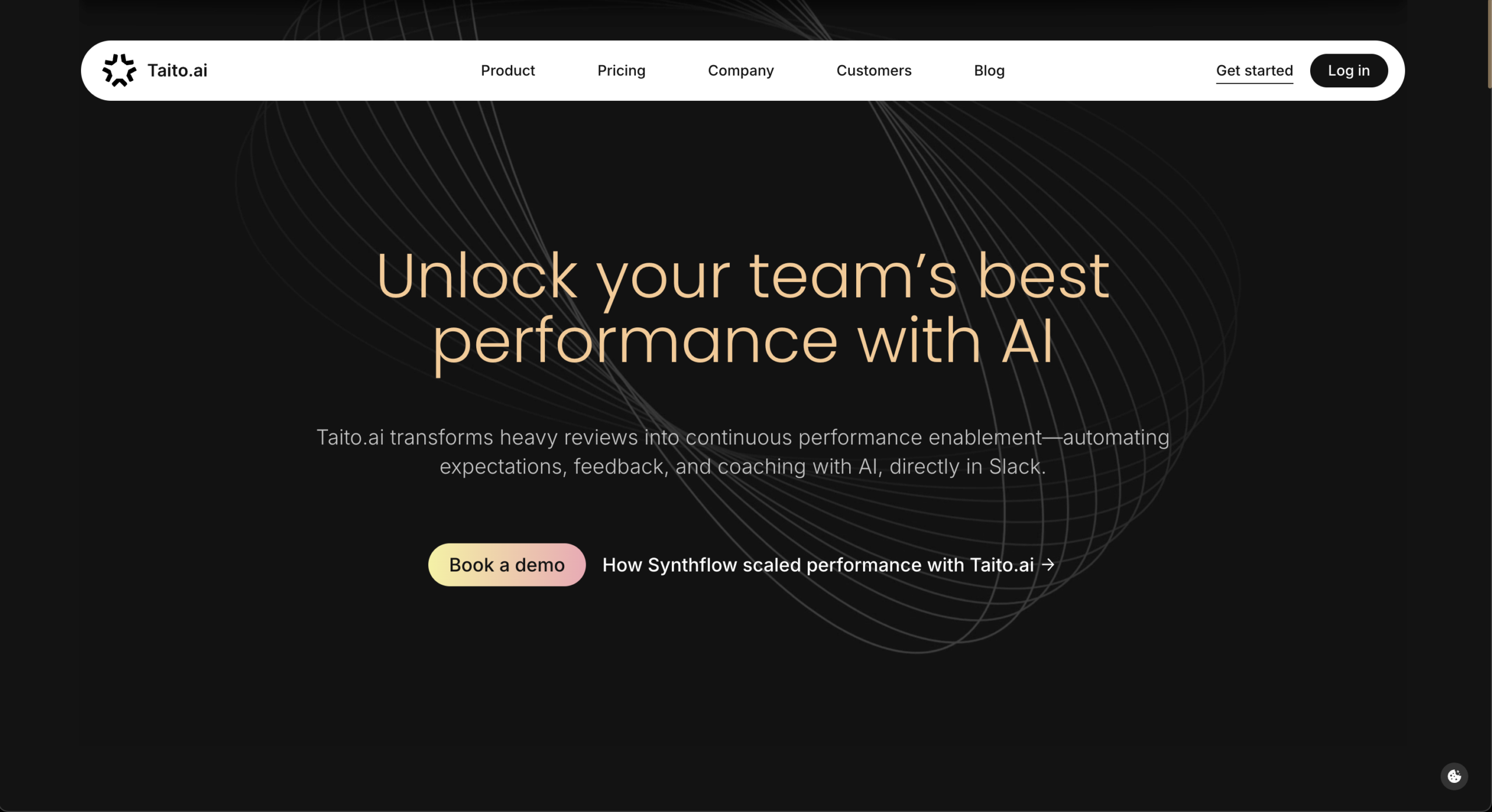
As one of the newer and more focused tools in the category, Taito.ai reflects the broader shift toward simpler and more conversational performance management workflows. The platform integrates heavily with Slack and uses AI to support meeting preparation, summaries, and employee feedback processes.
Key features include
- AI-assisted 1:1 meeting preparation
- Continuous feedback tools
- Lightweight pulse surveys
- Goal and objective tracking
- Slack-native workflows
- Meeting summaries and recommendations
- Employee engagement insights
Pricing
Pricing depends on team size and selected modules.