

Today’s best survey tools help HR and managers spot engagement trends, follow up on sentiment shifts, and connect feedback to real improvements.
Whether you’re collecting pulse data, gathering peer feedback, or running 360° reviews, the right platform will turn responses into action (not just another dashboard).
This guide breaks down the leading survey tools for 2026: what they do best, where they fall short, and the types of organizations they’ll fit best.
What to look for in an employee survey tool?
The right tool depends on your team, your culture, and the problem you’re trying to solve. That said, there are a handful of core factors that matter for most teams:
- Survey types that fit your team’s needs: Teams often need different surveys that suit different needs, from quick pulse checks to deeper 360s and structured 1:1 feedback. It’s helpful to have a single platform that supports all your needs to avoid paying for multiple single-use tools.
- Question banks and survey templates: Reliable insights start with good questions. Strong survey templates and validated question banks make it easier to gather insights without reinventing the wheel every time.
- Useful reporting (not just more dashboards): Insightful data can help you spot gaps, recognize trends, and guide you toward better decisions. But more data isn’t always better. Look for tools that surface what matters most in a way that’s actually helpful, especially when you’re dealing with large datasets.
- Intuitive UI: Smooth processes depend on clarity and ease of use. A platform that feels natural to navigate will make it simpler to create surveys, collect input, and follow up without unnecessary steps.
How to choose based on your team’s size and stage:
-
Small teams (under 100): Ease of use should be the priority. You want a survey tool that’s quick to set up, simple to manage, and doesn’t require dedicated admin time. The smoother it is to launch and follow up, the more consistently you’ll use it.
-
Growing teams (100–500): Look for structure that scales. As processes become more complex, automations, reusable templates, and solid integrations help you run surveys reliably without adding overhead.
-
Larger companies (500+): Beyond the basics, depth matters. Strong analytics, detailed reporting, and flexible workflows help you make sense of larger datasets and run surveys across teams, locations, and systems.
8 Employee survey tools worth exploring in 2025
1. Small Improvements
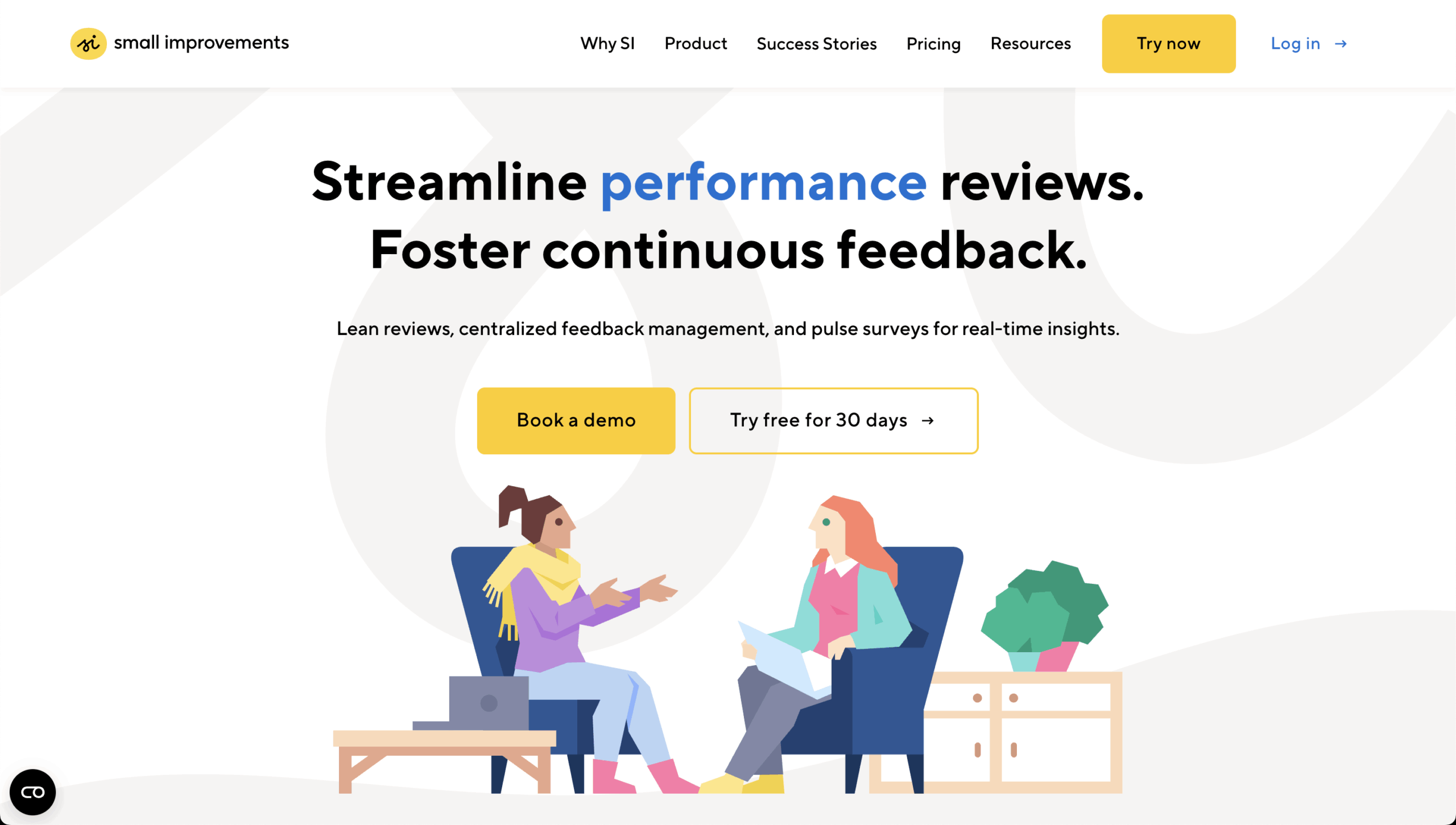
Best for: Small and midsize teams that want to combine engagement surveys and 360° feedback without enterprise complexity.
Small Improvements helps teams run engagement surveys, lightweight reviews, 360° feedback, and 1:1’s meetings in one place. The focus is on conversation over process, managers get structure without bureaucracy, and HR gains visibility without extra admin.
Pros:
- Fast adoption and easy to use
- Good for continuous feedback and 1:1 meetings adoption
- Seamless integrations with HRIS and productivity tools
Cons:
- Analytics are lighter than enterprise tools
Pricing: Starting at $3 per user per month. 30-day free trial. No seat minimum. No implementation fees.
2. Honestly
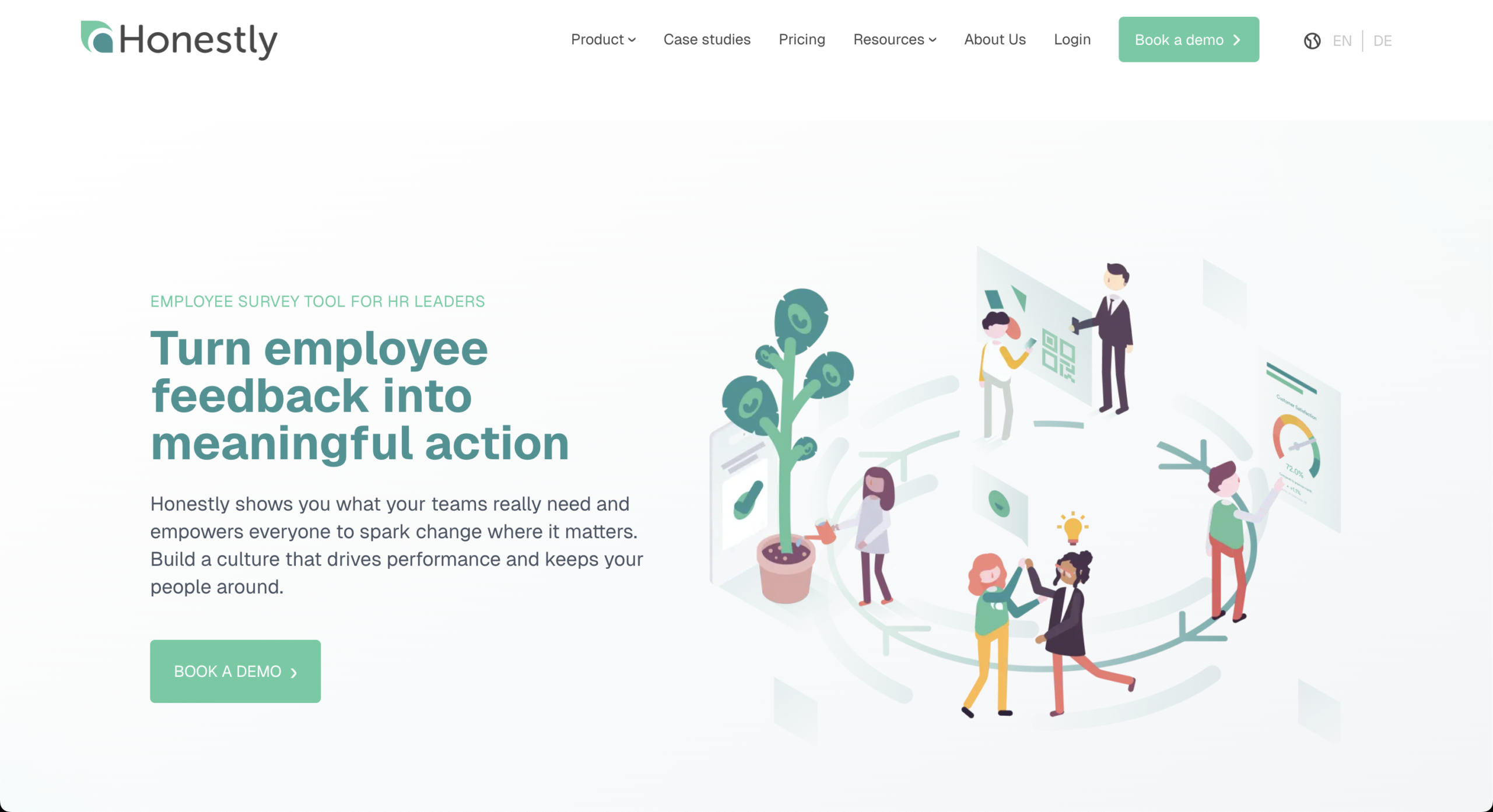
Best for: Mid-market to enterprise organisations (200–10,000+ employees) in DACH that need scientifically validated surveys for distributed and blue-collar workforces.
Honestly combines academic rigor with practical deployment. Built in partnership with FU Berlin, the platform delivers pulse and engagement surveys, 360° feedback, onboarding, exits, and custom surveys. AI text analysis categorizes feedback automatically. Impact Prediction identifies which drivers move engagement most. Anonymous chat enables sensitive discussions within anonymity thresholds.
Multilingual by design, code-based participation for employees without email, ISO 27001 certified, DSGVO compliant.
Pros
- Scientific validity (FU Berlin)
- Multilingual, blue-collar-ready distribution
- AI analysis and Impact Prediction
- Strong anonymity and compliance
- Anonymous chat and initiative tracking
Cons
- DACH market focus
- Pricing on request only
- Best with thoughtful implementation
Pricing: On request. Free trial available upon request.
3. Teamspective
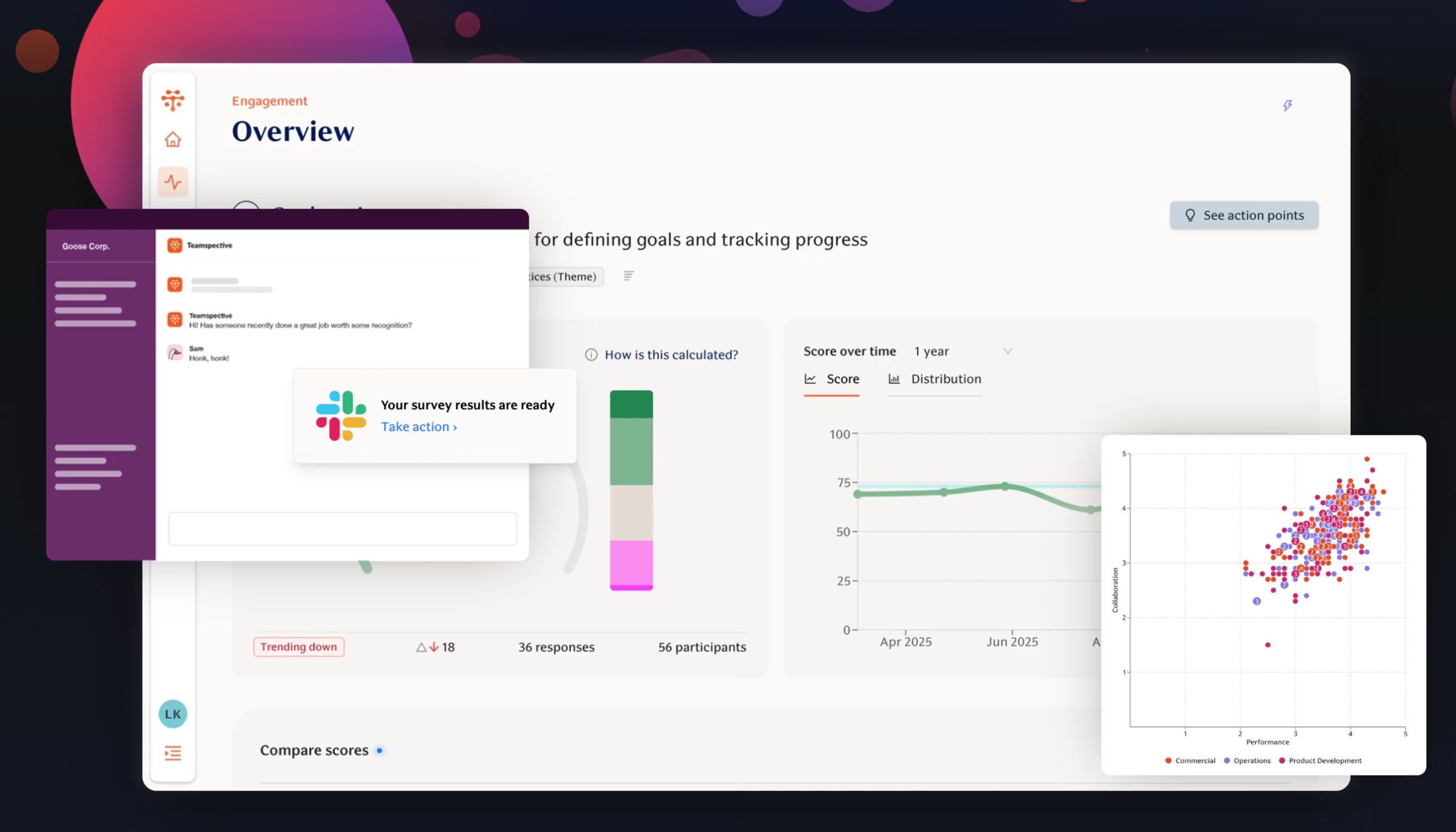
Best for: Larger companies in Nordics and Europe that want to enable leaders to better lead their teams with people data.
Teamspective is a Leadership Enablement Platform combining employee engagement, performance management, and Organizational Network Analysis (ONA). Its AI agent turns insights into personalised action plans for every manager, running directly inside Slack, Teams, or popular AI tools to keep friction low and response rates high.
Pros
- Combines engagement, performance, and ONA
- AI agent delivers ready-to-use guidance to each manager
- Works natively in Slack, Teams, ChatGPT, Claude, and CoPilot
- 60+ HR system integrations with SSO support
Cons
- Broader feature set may be more than smaller teams need
- ONA capabilities require some internal context to interpret well
- Higher cost for smaller teams
Pricing: Starting at €5.50 per seat per month.
4. ThriveSparrow
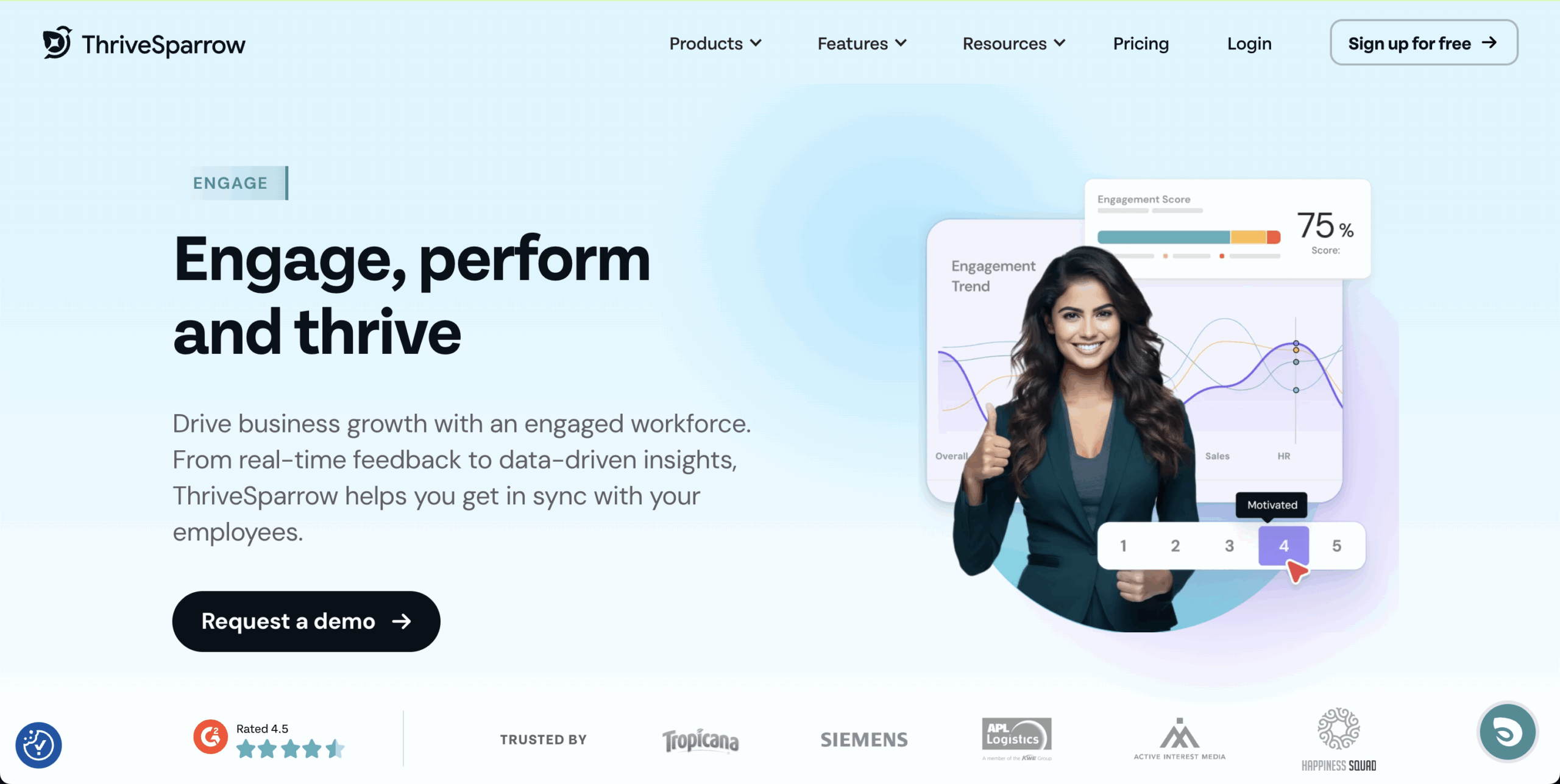
Best for: Small to midsize orgs that want engagement and performance insights without enterprise complexity. ThriveSparrow blends customizable reviews, AI-powered growth plans, and performance dashboards. It is intuitive and affordable, though best for companies under a few hundred employees.
ThriveSparrow lets HR teams run pulse surveys, measure sentiment, and track improvement actions in one dashboard. Its AI engine categorises responses and heat maps make engagement trends visible at a glance.
Pros
- AI-driven sentiment analysis
- Continuous feedback
- Goal setting
- Jira Integration
Cons
- Some integrations add extra cost
- Limited mobile dashboard for HR users
- Newer vendor with smaller install base
Pricing: From $3 /user /month. Free trial available.
5. Connecteam
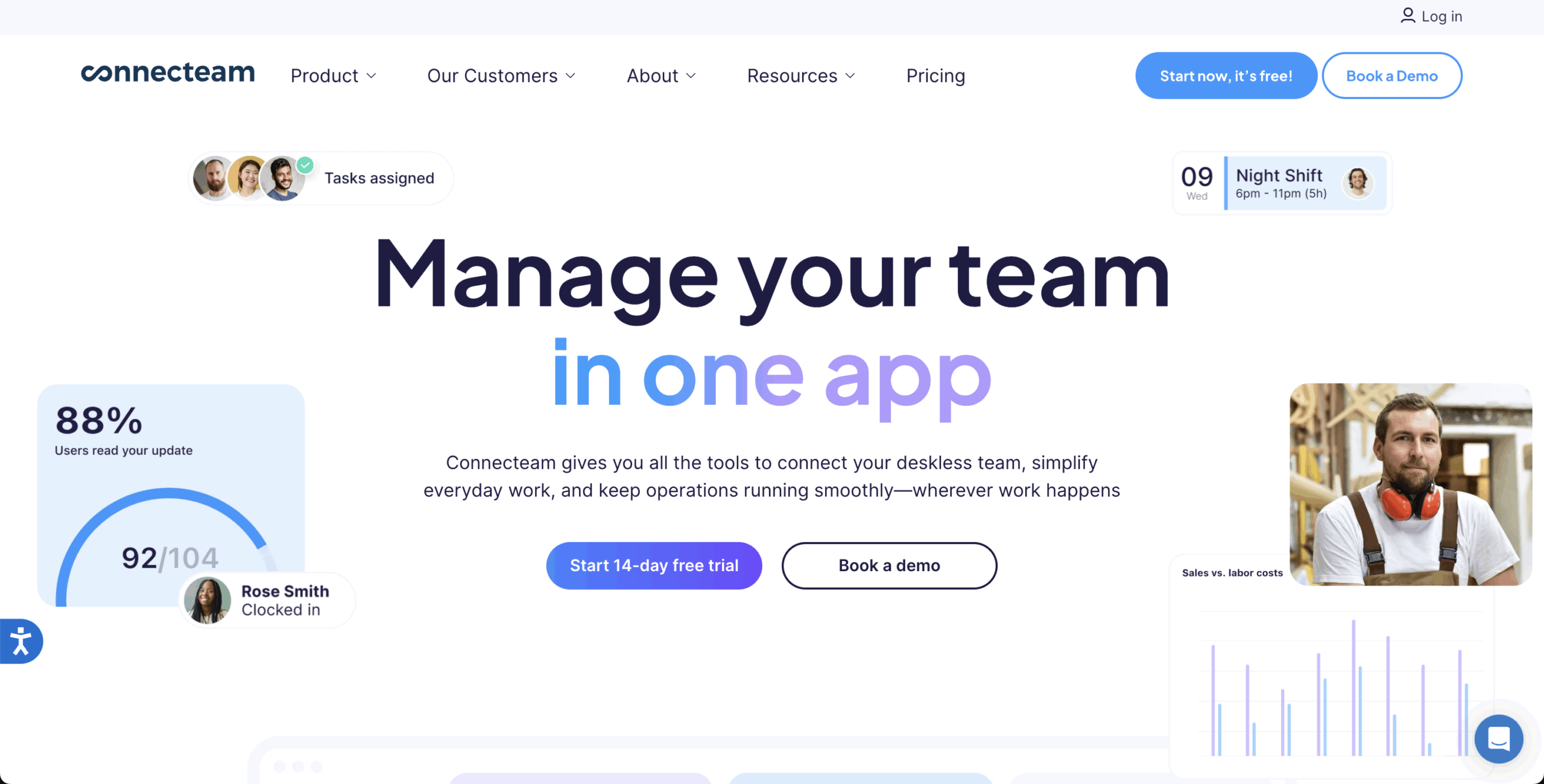
Best for: Deskless or mobile workforces that want to combine surveys, communication, and recognition in one app.
Connecteam is a mobile-first engagement suite built for on-the-go teams. It combines surveys, polls, chat, recognition, and training modules in one platform, helping managers connect with employees anywhere.
Pros
- User-friendly mobile experience
- Combines surveys, recognition, and training
- Transparent pricing with free plan
Cons
- Learning curve due to broad feature set
- Some functions split across different hubs
- Advanced analytics limited compared to larger suites
Pricing: Per hub from $29 to $99 /month (for 30 users). 14-day free trial.
6. Netigate
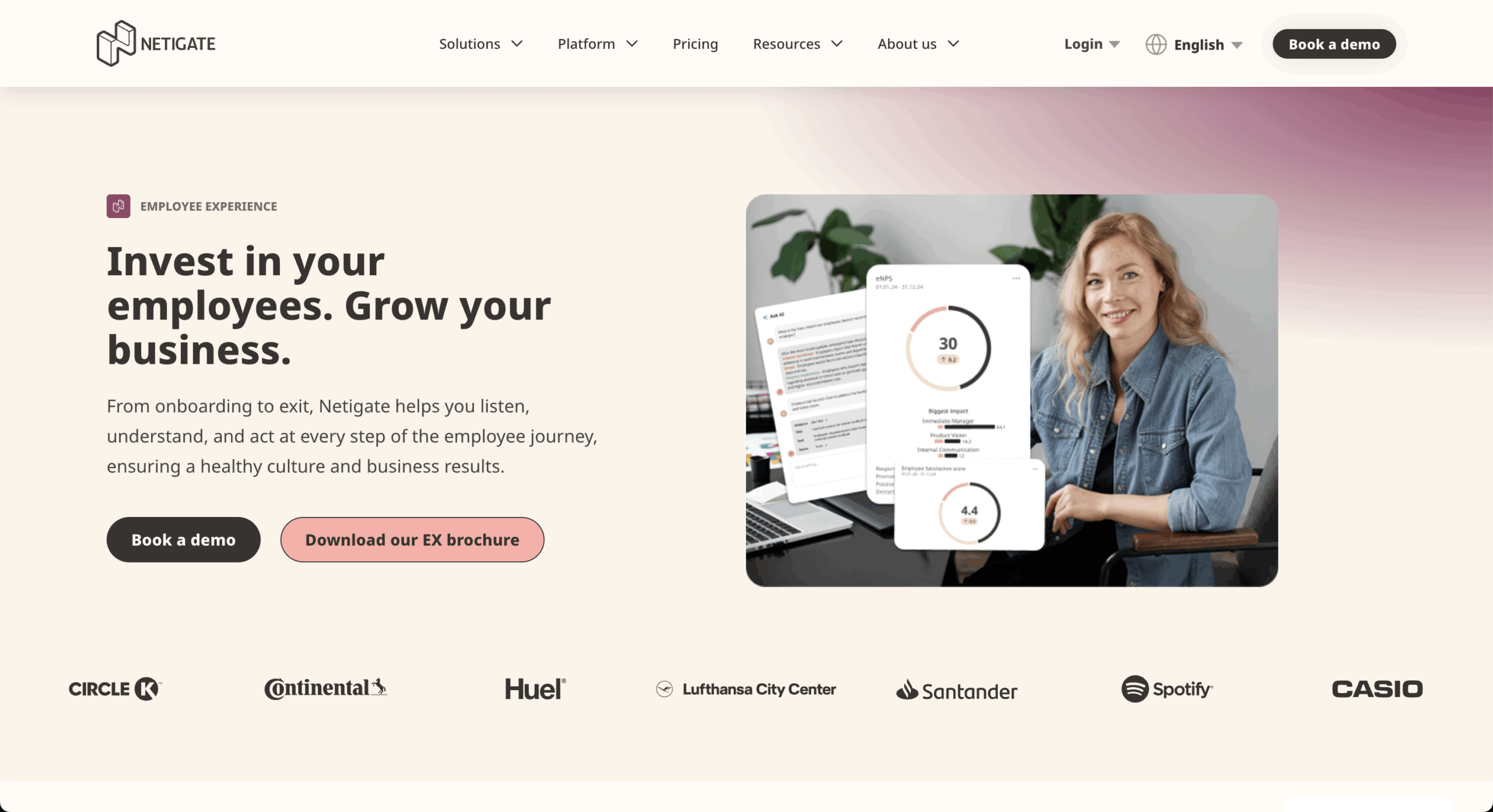
Best for: Enterprises that need robust analytics and multi-language support for large workforces.
Netigate offers advanced reporting, AI text analysis, and customisable survey templates for both employee and customer feedback. It’s ideal for organisations that take data seriously and want one platform for all feedback types.
Pros
- Powerful analytics and visualisation
- Strong global support
- Reliable enterprise infrastructure
Cons
- Higher cost than mid-market tools
- Setup requires onboarding
- Complex for smaller teams
Pricing: Pricing on request. No free trial available.
7. ProProfs Survey Maker
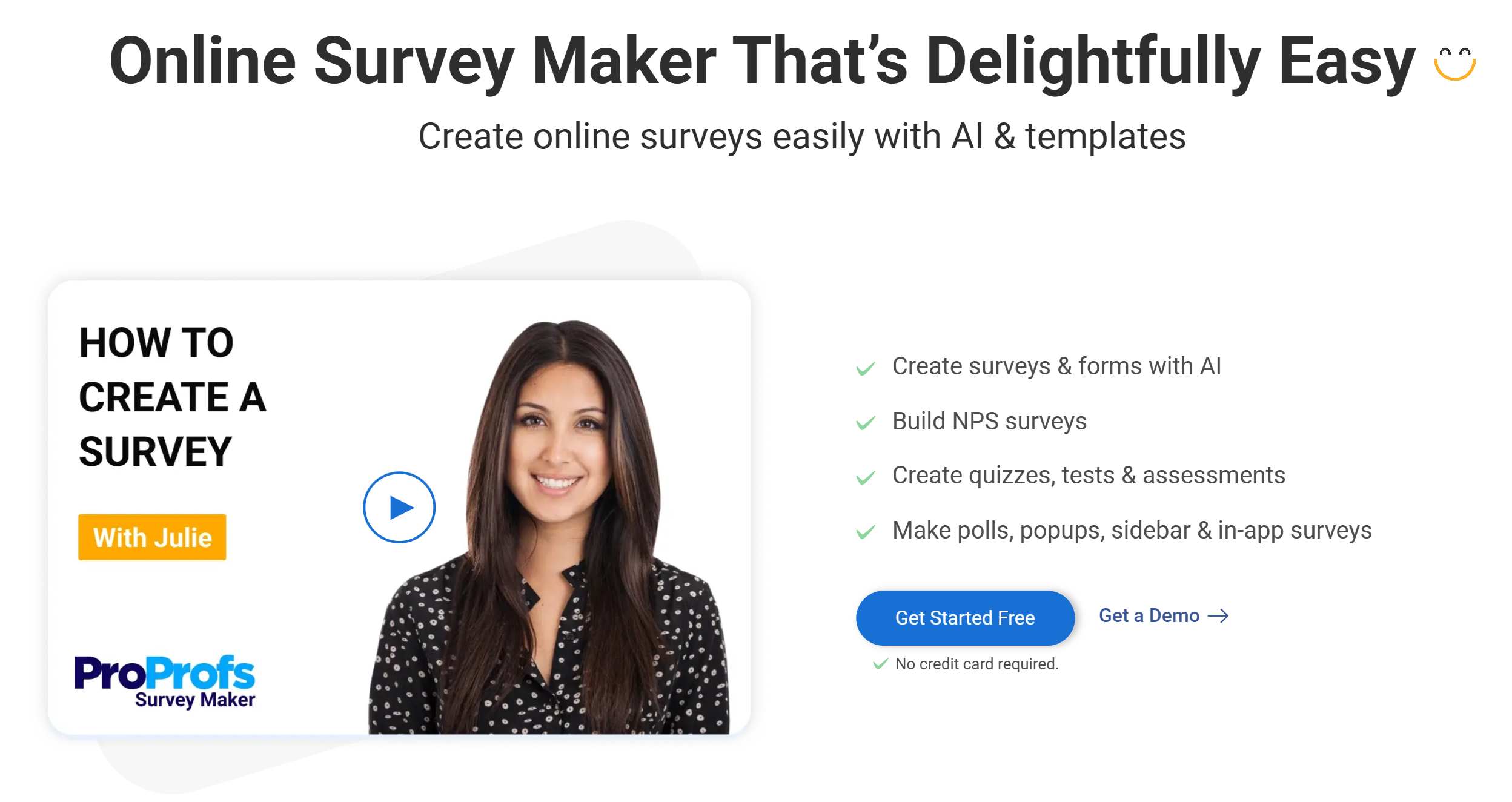
Best for: Established businesses and enterprises that need unlimited responses, advanced integrations, high-level security (SSO/GDPR), and AI-powered survey creation.
ProProfs Survey Maker keeps things incredibly scalable without the usual “quota headaches”. The AI builder is a big time-saver. Give it a simple prompt (like a signup feedback survey), and it generates a polished survey with branching logic in seconds. With over 100 templates and deep customization (including white-label options), it’s built for speed and enterprise control.
Pros
- AI-powered survey creation
- 100+ professional templates
- Full branding + customization, including white-label
- 20+ question types (NPS, ranking, slider, etc.)
- Advanced features like Skip Logic/Branching and Scored Surveys
- GDPR compliant + SSO (SAML) in the Enterprise plan
- Integrates with Salesforce, HubSpot, and more
Cons
- No dark mode for long hours or late nights
- Dedicated onboarding/account manager only in paid plans
Pricing: A free plan is available with all premium features. Paid starts at $19.99/month, Business at $49.99, and Enterprise at $149.99.
8. SurveyMonkey
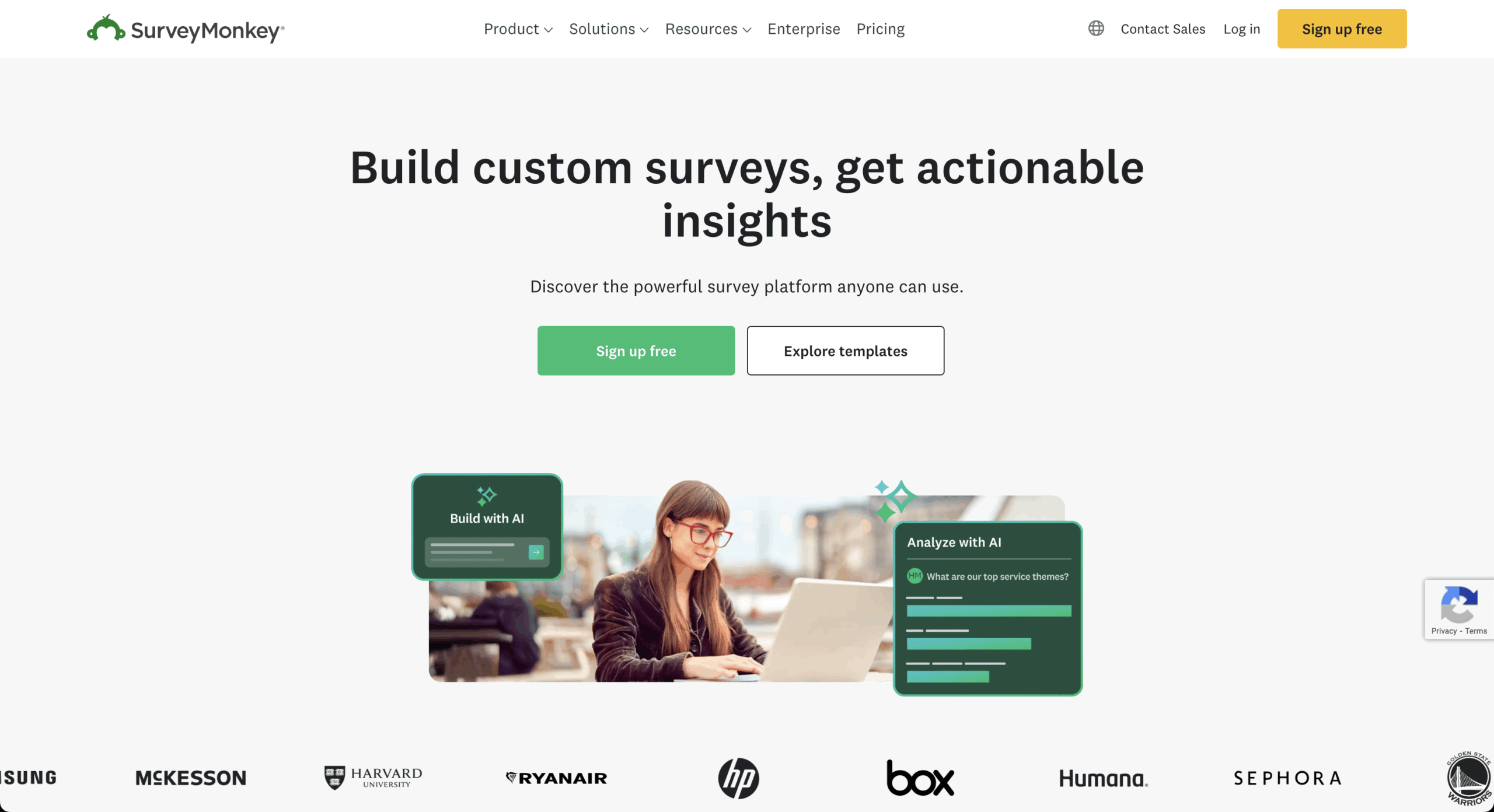
Best for: Companies already using SurveyMonkey that want to expand into employee engagement and pulse surveys.
SurveyMonkey remains the most recognized survey platform for its flexibility and reliability. Its employee templates make it easy to build consistent engagement programs without heavy onboarding.
Pros
- Easy to scale and customise
- Reliable platform with large template library
- Strong integrations with HR tools
Cons
- Generic reporting
- Broad, generic platform not tailored to just employee surveys
Pricing: Free starting tier; paid versions scale.
Final thoughts: pick what fits your team today (there’s no single best tool)
Survey tools only work when they match how your team operates. Small teams benefit most from simplicity. Growing organisations need structure that scales. Larger companies rely on deeper analytics and flexible workflows to handle more complex feedback loops.
The right choice is the one that helps you listen consistently and follow up in a meaningful way. If you want something simple and people-focused, Small Improvements might be the right fit. If not, this guide should help you narrow down what will work for your team and culture.