
1:1 Meetings: Not just operational
When using Small Improvements for your regular 1:1 meetings, our hope is that the functionality streamlines your ability to formulate a game plan for regular check-ins.
Table of Contents
Capturing important touch points in the shared talking points and meeting notes can also be a powerful resource when it comes performance review time. We highly recommend looking back on your running log of meetings as a another resource available to deepen your perspective on your team’s growth.
There is, however, one potential drawback a tool like ours carries though, and we feel it is really important to always be aware of it:
The structure of our 1:1 meeting hub implicitly suggests the meetings are operational.
When in fact, 1:1s should always incorporate feedback, maybe some venting, and occasionally even non-work conversations.
Below, we go into a little more detail.
Outside of Operational
As mentioned above, the clickable talking points suggest a tactical approach. It can be therefore tempting to focus solely on a list of todos that must be checked through week over week. But we recommend always leaving space for the personal:
- How is your report feeling in their role? How are you supporting their long term career goals?
- What does my manager see as a priority for our team broadly speaking? Can I just have some time to vent frustrations?
- How was that vacation? I love Paris too! Did you check out Montmartre? (Seriously. Remember, we’re people! We spend a lot of time with each other at work. Having conversations about non-work stuff can be just as important when nurturing a successful collaborative relationship, as getting tasks done.)
All of the above are just a few examples of other areas of focus you can frequently incorporate in your 1:1s.
Breaking through the check-marks
So how can you use our tool but find ways to weave in non-operational discussions? Below are a few ideas you could try, please let us know if you are using other techniques! We’d love to share them.
A standing, general talking point
Consider having your first talking point consistently be something general and inviting.
“How is it going?” or even “General chat” – These are good examples to keep the meeting loose and open for a basic update.
Pressure valve
For Managers specifically- Since directly acknowledging frustrations might not be the most positive spark to a check-in, consider setting yourself a reminder as a private talking point.
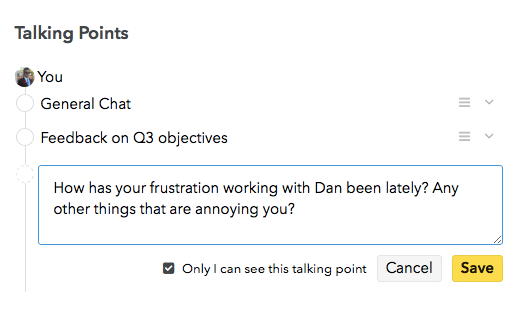
And of course: Blowing off steam is a normal part of every hard-working team member’s experience.. But if you as a manager find recurring themes when frustrations are expressed, you should probably be doing something about it.
Consider keeping a running list of gripes within the private notes. Since you can look back through all the threaded notes- When you notice patterns, use that as an opportunity to take action.
Fun. It’s allowed.
One of my reports and I have developed a mosaic of in-jokes. Mostly around memes and Slack emojis we use as shorthand.
For fun, she will occasionally post her first talking point as a highlight of what Chuck Norris is capable of, as it relates to this meme.

It breaks the ice, we have a laugh, and then on to plans for the following week.
Got feedback?
We highly recommend having the last talking point a manager creates, always be: “Feedback for me”. Or something to that effect.
People perhaps might be shy or cautious about being entirely candid with you.. But keep asking. Create a trusting environment for your team to communicate with you, and all will benefit.
You will only grow as a leader of people if you listen to your team. Always keep the door open for feedback, it is crucial for you and your team’s success.
Discover more resources

The HR Hitlist #1: Saying “no”
The time is upon us for human resources to step up as a practice and lead. Never before has the work of HR been so critical to organizational success. To meet this challenge requires that we break some old habits. This is the first in a series of guest posts from thought leader, Jason Lauritsen,…

The 10 Best Performance Management Tools in 2026 (And How to Choose the Right One for Your Team)
Why companies are rethinking performance right now? Performance management has come a long way from the once-a-year review and vague development goals. Many teams are moving away from rigid processes and starting to ask a more useful question: how can we help employees grow while still hitting goals as a company?

7 Best Leapsome Alternatives in 2026
Leapsome has become one of the most well-known platforms in modern performance management. By combining reviews, engagement surveys, goals, learning, and employee development in one system, it’s become especially popular among fast-growing companies looking to centralize their people processes.

6 Best 15Five Alternatives
15Five has built its reputation around manager effectiveness. Its platform combines regular check-ins, 1:1s, performance reviews, goals, engagement surveys, and coaching tools to help managers stay closer to their teams.

Setting goals, the SMART way
Want real results? Then setting realistic and achievable SMART goals is the way to go. Here is an outline of the process and best practices to get you started.

How to build the best internal mobility program
Is internal mobility the way to keep talented employees from leaving your company too soon?